Book Appointment Now

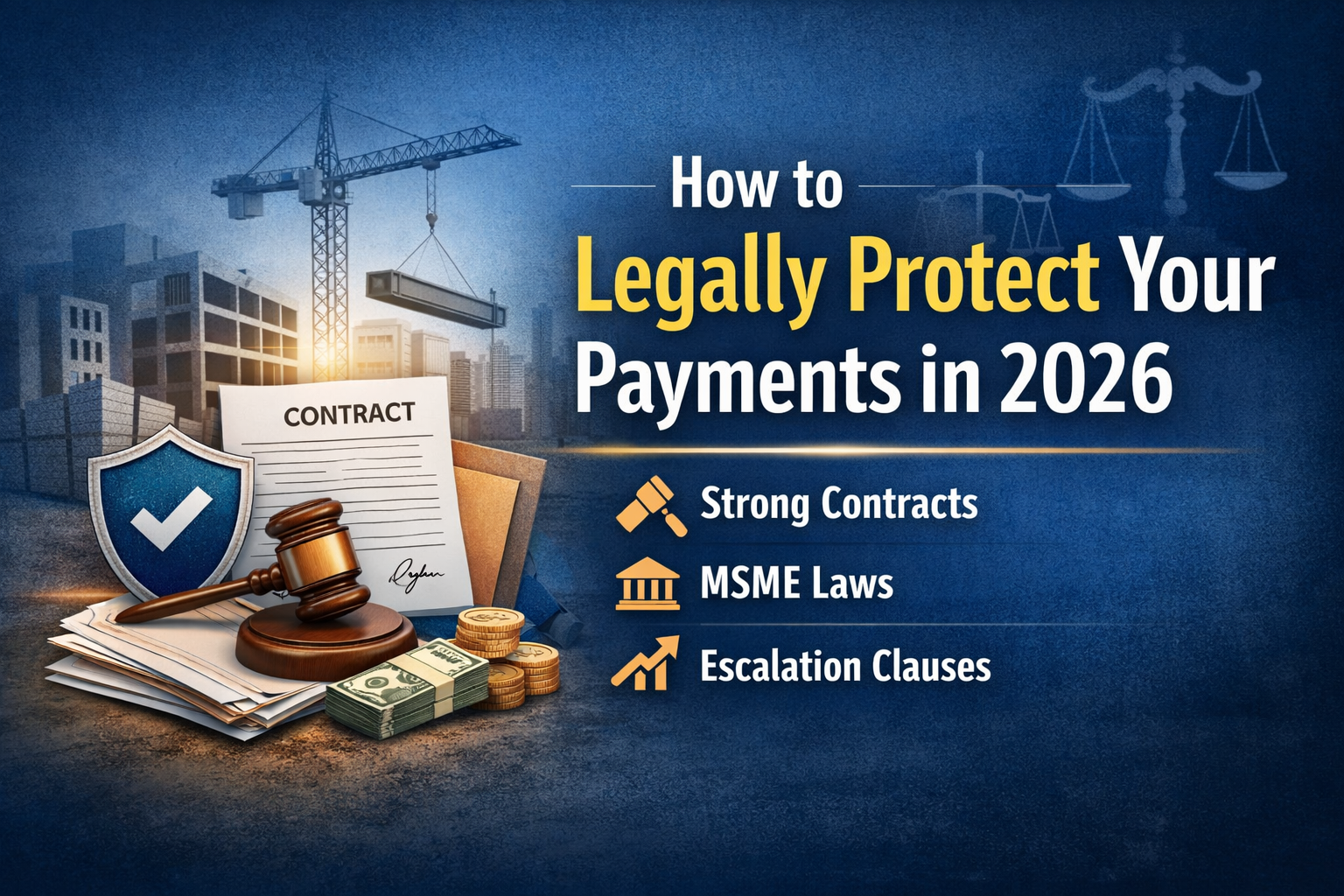
How to Legally Protect Your Payments in 2026
In the construction industry, completing the work does not guarantee getting paid on time.
Many contractors finish projects successfully — but struggle with delayed payments, retention money blocks, and certification delays.
In 2026, legal awareness is no longer optional. If you want stable cash flow and long-term growth, you must understand how to legally protect your payments in 2026.
Let’s break it down in simple terms.
Why Payment Protection Matters More in 2026

Construction projects are becoming:
- Larger in scale
- More contract-driven
- Strictly documented
- Digitally monitored
At the same time, payment cycles are getting longer in many private projects.
If you don’t legally protect your payments in 2026, you may:
- Face cash flow shortages
- Struggle to pay labour
- Depend on high-interest loans
- Lose working capital
Legal protection is not about conflict. It is about clarity and prevention.
1️⃣ Use Strong Payment Clauses in Contracts
Everything starts with the contract.
Before signing any agreement, ensure it clearly defines:
- Payment timeline (30, 45, or 60 days)
- Billing cycle
- Certification period
- Retention percentage
- Interest on delayed payments
Avoid vague terms like “payment will be processed soon.”
Clear clauses help you legally protect your payments in 2026 if disputes arise.
If it is not written, it is not protected.
2️⃣ Include Interest on Delayed Payments
One of the most powerful legal tools is adding a delayed payment interest clause.
For example:
“Delayed payments beyond 45 days will attract interest at 12% per annum.”
This encourages timely payments.
Many contractors hesitate to include this clause. But in 2026, professional contracts demand financial discipline.
If the client refuses this clause, that itself is a red flag.
3️⃣ Protect Yourself Under MSME Laws (If Applicable)
If your company is registered under MSME (Micro, Small & Medium Enterprises), you may have additional legal protection.
Under MSME provisions:
- Buyers must pay within 45 days
- Delays can attract compound interest
- You can approach legal recovery platforms
Many contractors are unaware of these protections.
If you qualify, use them to legally protect your payments in 2026.
4️⃣ Proper Documentation Is Legal Strength
Even strong contracts fail without documentation.
Maintain:
- Signed work orders
- Site instructions in writing
- Email confirmations
- Measurement records
- Invoice copies
- Delivery challans
Avoid verbal approvals.
In disputes, documentation becomes your legal shield.
In 2026, digital documentation is essential to legally protect your payments.
5️⃣ Define Clear Milestones
Instead of waiting for project completion, structure payments in stages:
- Mobilization advance
- Material supply stage
- Structural completion
- Finishing stage
- Final billing
Milestone-based payments reduce risk exposure.
Never fund the entire project from your pocket.
6️⃣ Use Escalation Clauses
Material prices fluctuate frequently.
Steel, cement, fuel, and labour costs can increase during long-term projects.
Without an escalation clause, contractors absorb the loss.
An escalation clause ensures:
- Price adjustments
- Reduced financial risk
- Contract fairness
This is a critical way to legally protect your payments in 2026, especially in volatile markets.
7️⃣ Send Timely Legal Notices When Required
If payments are delayed beyond agreed terms:
- Send formal reminders
- Issue written notices
- Mention contract clauses
- Keep tone professional
Do not wait for months hoping payment will come automatically.
Early legal communication strengthens your position.
8️⃣ Avoid Over-Dependence on One Client
Financial risk increases when:
- 70–80% of your revenue depends on one developer
- Payments from one source control your cash flow
Diversifying clients reduces vulnerability.
Legal protection also means financial strategy.
9️⃣ Consult a Construction Lawyer Before Major Contracts
For high-value projects, spend money on legal review.
A small legal fee today can save lakhs tomorrow.
Lawyers can help:
- Modify risky clauses
- Add protective terms
- Identify hidden liabilities
In 2026, professional contractors treat contracts as financial tools — not just paperwork.
Common Mistakes Contractors Still Make
- Signing contracts without reading
- Ignoring retention clauses
- Accepting verbal payment promises
- Failing to register under MSME
- Not maintaining billing records
Avoiding these mistakes helps legally protect your payments in 2026.
Final Thoughts
The construction industry is competitive and capital-intensive.
Execution skills are important — but financial survival depends on legal awareness.
To legally protect your payments in 2026, you must:
- Strengthen contracts
- Document everything
- Use legal provisions
- Act early in disputes
- Plan cash flow strategically
Smart contractors build strong structures.
Smarter contractors build strong agreements.
If you want long-term stability, learning how to legally protect your payments in 2026 is essential.


[…] Payment disputes are common in construction. Clients may question completed quantities or delay payments. A well-prepared BOQ acts as a reference document during billing. Since quantities and descriptions are already agreed upon, it becomes easier to claim payments. For small contractors, this reduces conflicts and strengthens their legal position. Understanding BOQ explained for small contractors helps in securing smoother and faster payments. […]