Book Appointment Now

Urban–Rural Wage Gap: Powerful Statistical Analysis
Introduction
India’s construction and labour market is growing fast. Mega cities are expanding. Tier-2 and Tier-3 cities are developing rapidly. Rural infrastructure is improving.
But one important question remains:
Are workers being paid equally across regions?
The answer lies in understanding Urban-Rural Wage Gap — the gap between daily wages in metros, smaller cities, and rural areas.
What Is Urban-Rural Wage Disparity?
Urban-Rural Wage Disparity refers to the difference in daily wage rates between:
- Major metropolitan cities
- Tier-2 / Tier-3 cities
- Rural areas
This gap affects:
- Labour migration
- Contractor costs
- Project budgets
- Worker quality of life
- Regional economic balance
Average Daily Wage Comparison (Construction Sector Example)
Below is a simplified comparative structure (illustrative industry averages):
| Region Type | Unskilled Labour (₹/day) | Semi-Skilled (₹/day) | Skilled (₹/day) |
| Metro Cities | 700 – 900 | 900 – 1200 | 1200 – 1800 |
| Tier-2 / Tier-3 | 500 – 700 | 700 – 1000 | 1000 – 1400 |
| Rural Areas | 350 – 500 | 500 – 700 | 700 – 1000 |
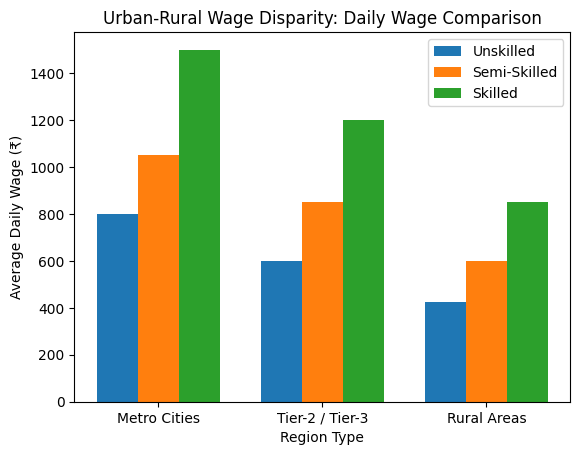
This clearly shows the scale of Urban-Rural Wage Disparity.
1️⃣ Metro Cities: Higher Wages, Higher Costs
Why Wages Are High:
- Higher cost of living
- Strong demand for skilled labour
- Large infrastructure projects
- Private sector dominance
Example Cities
Mumbai
Delhi
Bengaluru
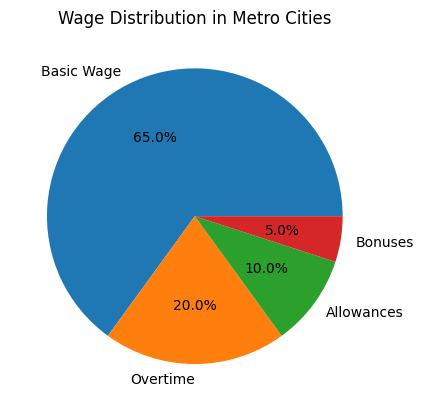
In metros:
- Labour demand is continuous
- Workers negotiate better rates
- Overtime payments are common
However, higher wages do not always mean higher savings due to rent, food, and transport costs.
2️⃣ Tier-2 & Tier-3 Cities: Growing but Balanced
These cities are developing rapidly.
Examples:
Lucknow
Indore
Jaipur
Why Wages Are Moderate:
- Lower living cost than metros
- Increasing infrastructure investment
- Government-backed housing and road projects
Here, Urban-Rural Wage Gap begins to narrow slightly compared to metros.
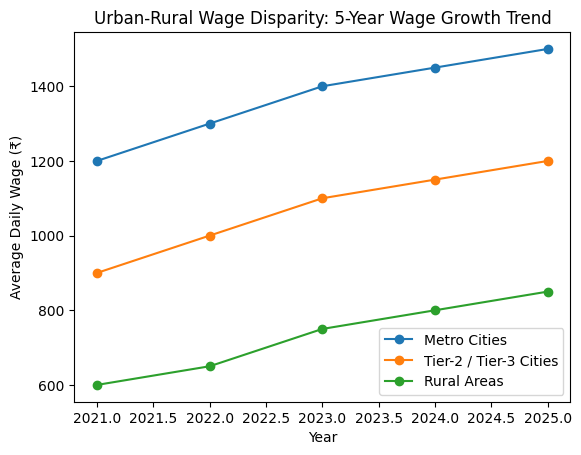
This will visually show the widening or narrowing of Urban-Rural Wage Disparity.
3️⃣ Rural Areas: Lowest Wage Structure
Rural wage rates are influenced by:
- Agricultural cycles
- Government employment schemes
- Limited private construction
- Lower project budgets
Many workers migrate from rural areas to cities due to Urban-Rural Wage Gap.
Major Factors:
- Limited demand for skilled labour
- Fewer commercial projects
- Payment delays
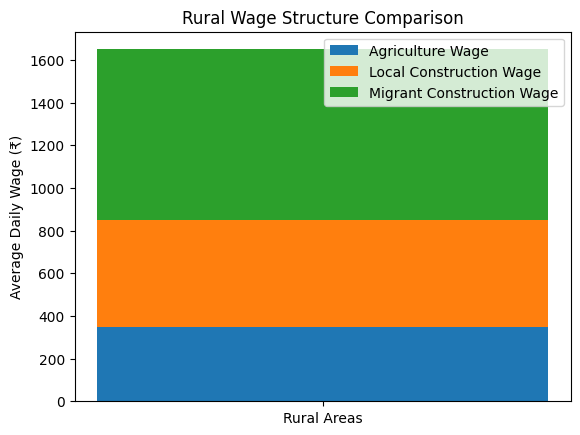
This shows why migration increases when Urban-Rural Wage Disparity rises.
Statistical Insight: Wage Gap Percentage
Let’s simplify the disparity percentage:
If:
- Metro Skilled Worker earns ₹1500/day
- Rural Skilled Worker earns ₹850/day
Difference = ₹650
Percentage Gap = (650 / 850) × 100 ≈ 76%
That is a significant Urban-Rural Wage Disparity.
For unskilled labour, the percentage gap can be even wider.
Key Reasons Behind Urban-Rural Wage Disparity
1. Cost of Living Index
Metro cities have 2–3x higher living expenses.
2. Demand-Supply Imbalance
Urban construction demand is higher.
3. Skill Concentration
Skilled labour clusters in cities.
4. Informal Labour Practices
Rural areas often lack structured wage systems.
Economic Impact of Urban-Rural Wage Disparity
Positive Effects:
- Encourages migration
- Fills urban labour shortage
- Boosts infrastructure speed
Negative Effects:
- Rural workforce drain
- Family separation
- Urban housing pressure
- Informal settlements growth
For contractors, understanding Urban-Rural Wage Gap helps in:
- Budget planning
- Project location decisions
- Labour sourcing strategy
How the Gap Is Changing
Recent trends show:
- Tier-2 cities closing the gap
- Rural wages rising slowly
- Digital labour platforms increasing transparency
- State-level minimum wage revisions
If this continues, Urban-Rural Wage Gap may reduce gradually over the next decade.
Conclusion
The reality is simple:
Metro workers earn more.
Tier-2 workers earn moderate wages.
Rural workers earn the least.
This difference defines the current Urban-Rural Wage Gap in India’s construction sector.
Understanding this gap is not just economic analysis — it is strategic planning for contractors, policymakers, and labour platforms.
If you are in construction hiring, project management, or labour sourcing, tracking Urban-Rural Wage Gap can directly impact your profitability and workforce stability.
It also helps in better budgeting, smarter workforce allocation, and long-term project planning. As wage patterns continue to evolve, data-driven decisions will become essential for staying competitive and building a sustainable labour ecosystem across regions.