Book Appointment Now

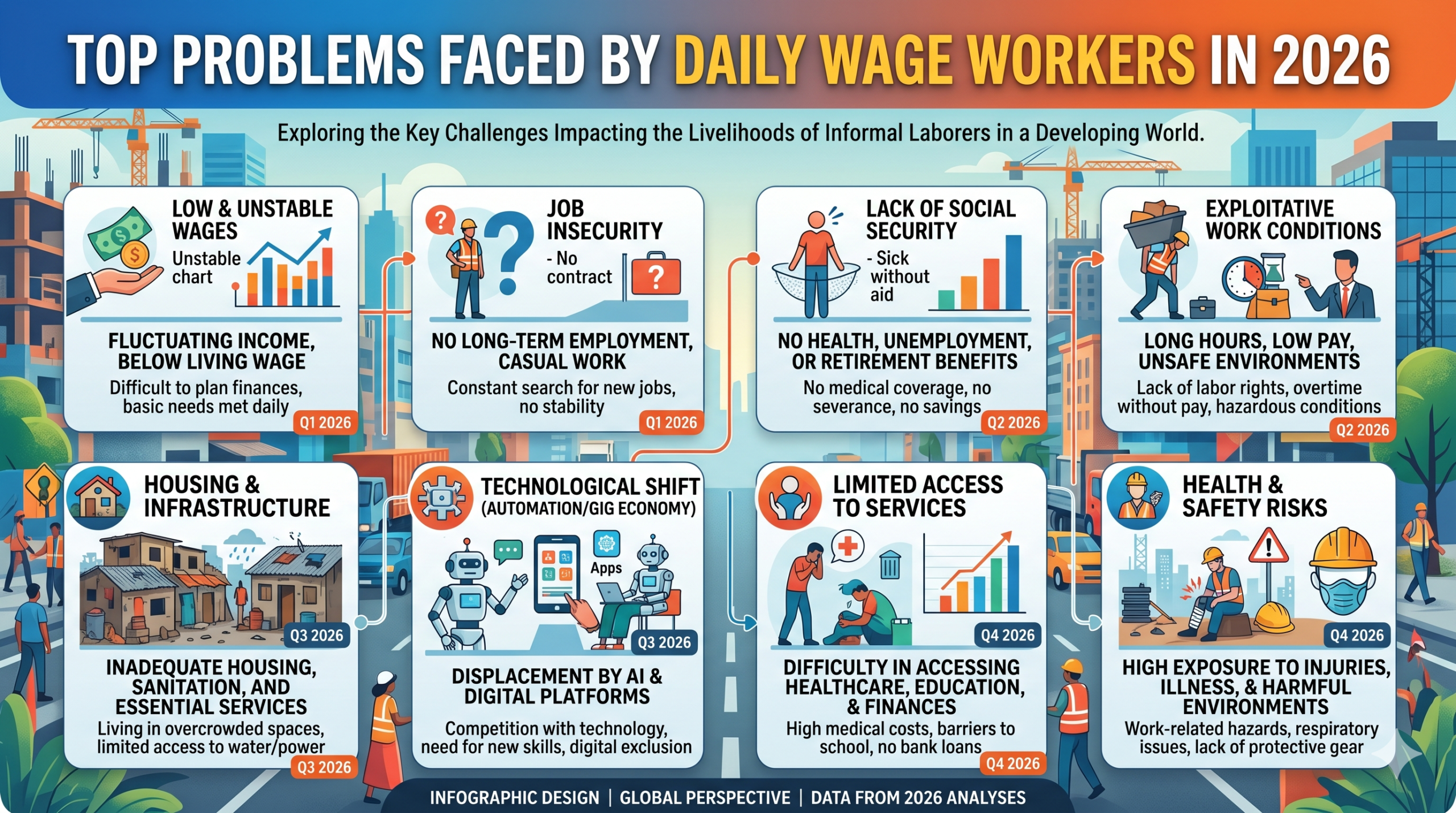
Top Problems Faced by Daily Wage Workers in 2026
Problems Faced by Daily Wage Workers remain a critical issue even as India continues to grow rapidly. From modern highways and high-rise buildings to metro networks, factories, and expanding cities, much of this development is powered by millions of daily wage workers who contribute through hard physical labour every day.
Despite their essential role in building the nation’s infrastructure and supporting economic progress, daily wage workers still encounter serious challenges in 2026. Understanding these problems is important to improve their living standards, employment stability, and long-term opportunities.
Who Are Daily Wage Workers?
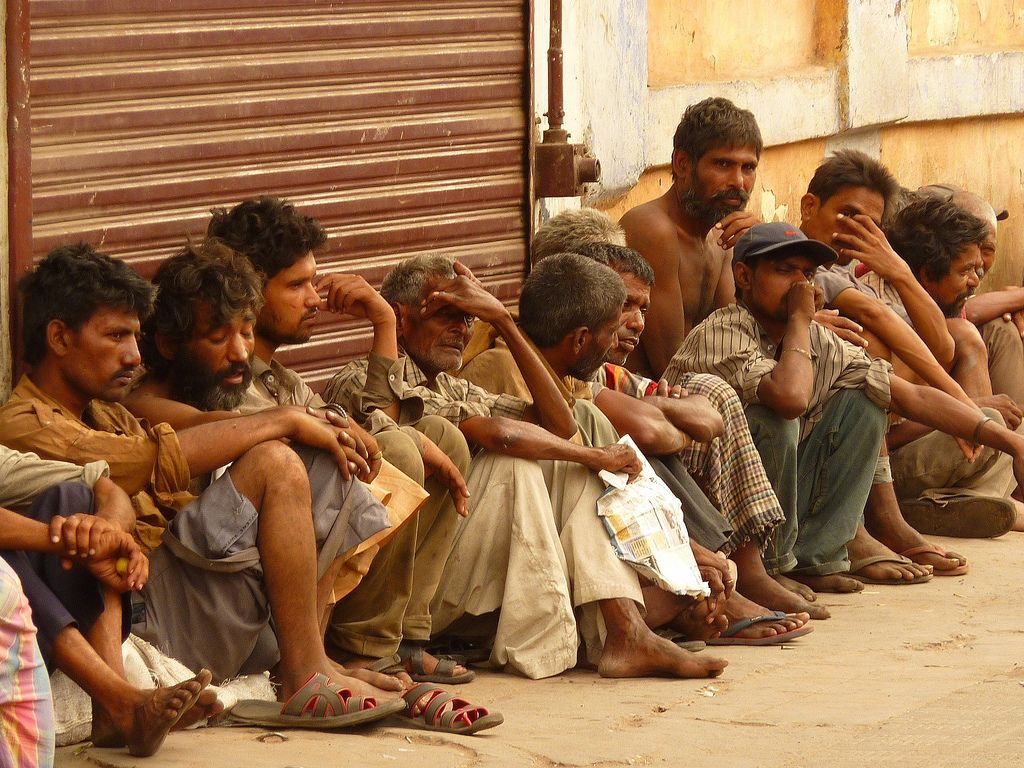
Daily wage workers are individuals who earn income based on the number of days they work. They are commonly employed in construction, manufacturing, loading work, housekeeping, agriculture, and small industrial jobs.
Unlike permanent employees, they usually do not receive fixed salaries or long-term employment contracts. Their livelihood depends entirely on daily job availability.
1. Lack of Job Security
One of the biggest problems faced by daily wage workers is unstable employment.
Workers often gather at labour markets or depend on contractors hoping to get work for the day. If work is unavailable, they earn nothing. Weather conditions, project delays, or economic slowdowns directly affect their income.
This uncertainty makes financial planning almost impossible for daily wage workers.
2. Irregular Income and Financial Stress
Income fluctuation is a major reality for daily wage workers.
Some days bring full earnings, while other days bring no work at all. Because of irregular income:
- Saving money becomes difficult
- Families struggle with monthly expenses
- Emergency situations create debt problems
Many workers rely on informal loans with high interest rates, which increases financial pressure.
3. Limited Access to Social Security Benefits
Although several welfare schemes exist, many daily wage workers remain outside formal systems like:
- Provident Fund (PF)
- Employee State Insurance (ESI)
- Health insurance
- Pension schemes
Lack of awareness, documentation issues, and informal hiring practices prevent workers from accessing these benefits.
4. Unsafe Working Conditions
Construction sites and manual labour environments can be dangerous.
Common safety issues include:
- Lack of safety equipment
- Long working hours
- Exposure to dust, chemicals, and heavy machinery
Accidents or injuries can immediately stop income because daily wage workers usually do not receive paid medical leave.
5. Migration and Housing Challenges
Many daily wage workers migrate from villages to cities in search of employment.
However, migration creates new difficulties:
- Expensive urban living costs
- Temporary or unsafe housing
- Separation from family members
- Limited access to education for children
Housing instability remains one of the biggest struggles for migrant workers.
6. Skill Gap and Limited Growth Opportunities
A large number of daily wage workers remain stuck in low-paying roles due to lack of skill training.
Without skill development:
- Income growth becomes slow
- Job opportunities remain limited
- Workers cannot move into higher-paying skilled roles
Training programs and digital learning platforms are becoming important solutions in 2026.
7. Dependence on Middlemen and Contractors
Traditional hiring systems often depend on contractors or labour agents.
This creates several problems:
- Delayed payments
- Wage deductions
- Lack of transparency
- Limited bargaining power
Many workers do not know the actual wages offered by employers, which affects fair compensation.
8. Digital Divide and Technology Challenges
While industries are becoming digital, many daily wage workers struggle to adapt due to:
- Low smartphone literacy
- Language barriers
- Lack of awareness about job apps
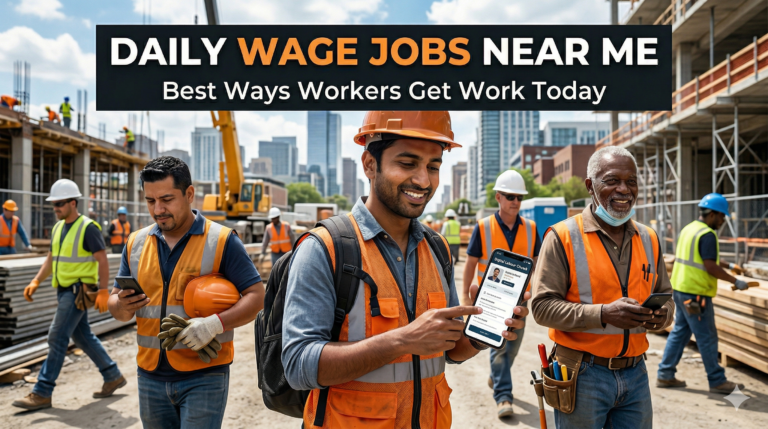
However, digital hiring platforms are slowly helping workers connect directly with employers, reducing dependency on middlemen.
9. Healthcare and Family Welfare Issues
Healthcare access continues to be a major concern.
Because earnings depend on physical labour, even minor illness can lead to income loss. Workers often delay medical treatment to avoid missing workdays, which worsens health problems over time.
Family welfare, education expenses, and childcare also remain ongoing challenges.
10. Social Recognition and Respect
Despite building cities and infrastructure, daily wage workers often receive little social recognition.
Improving respect, awareness, and inclusion is necessary to create a more balanced and fair labour ecosystem.
The Road Ahead for Daily Wage Workers
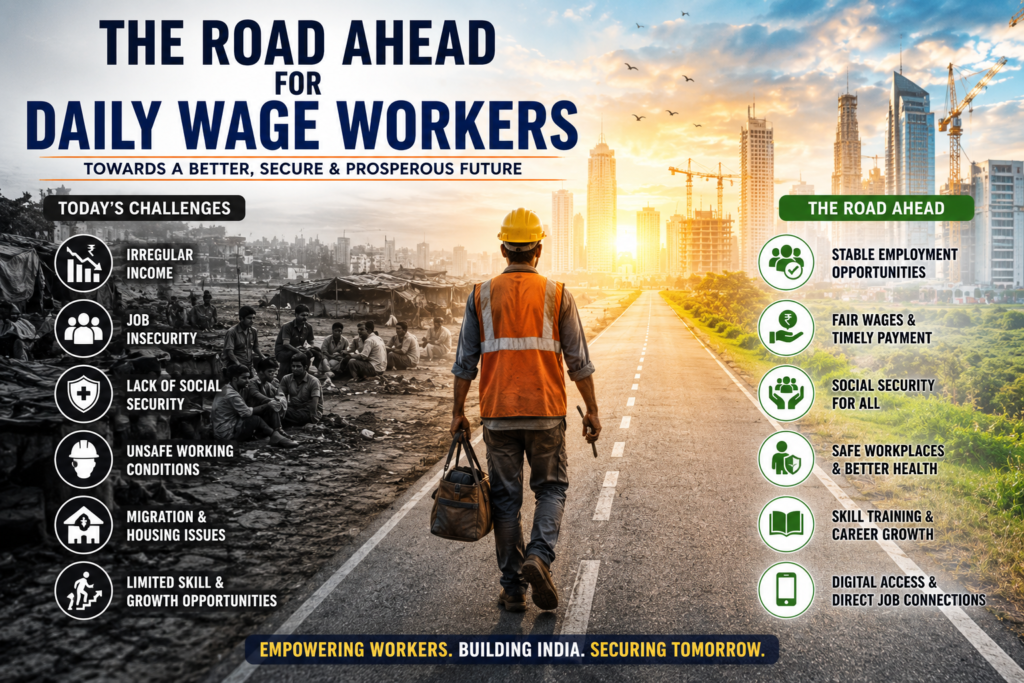
In 2026, several positive changes are emerging:
- Digital job platforms connecting workers directly to employers
- Skill development programs increasing earning potential
- Growing awareness about worker rights
- Technology improving hiring transparency
The future of daily wage workers depends on collaboration between government initiatives, private platforms, employers, and society as a whole.
Conclusion
Daily wage workers remain the backbone of India’s economic development. Yet, challenges like job insecurity, unsafe working conditions, irregular income, and limited social protection continue to affect their lives.
Addressing these issues requires awareness, policy support, skill training, and digital inclusion. By focusing on long-term solutions, India can create a stronger, more secure future for millions of daily wage workers.

[…] workers get selected within minutes, while others may wait for hours without certainty. This daily […]