Book Appointment Now

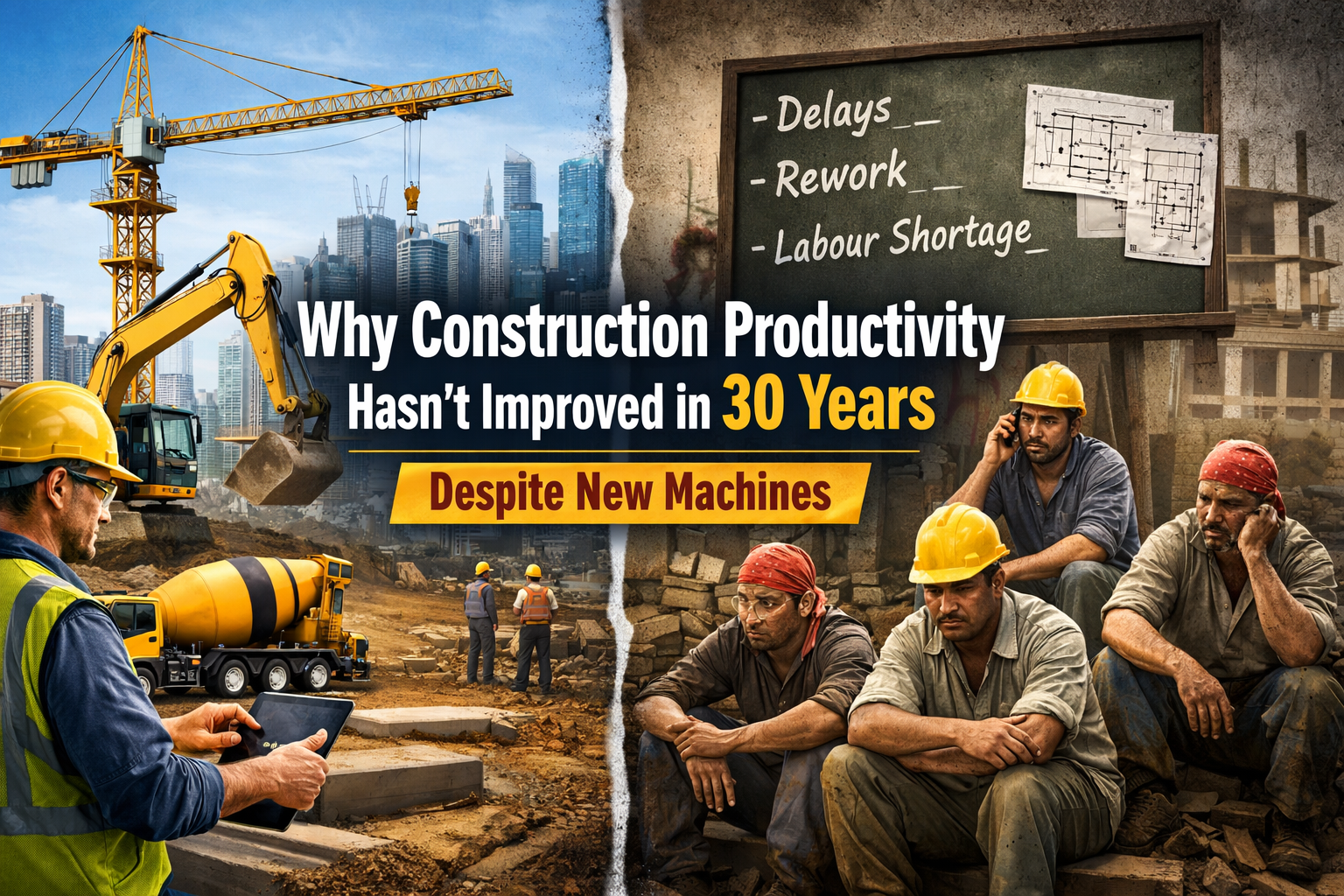
Why Construction Productivity Hasn’t Improved in 30 Years — Despite New Machines
For the last three decades, technology has transformed almost every industry.
Manufacturing became automated.
Banking became digital.
Retail went online.
But construction?
Despite cranes getting bigger, machines becoming faster, and tools becoming more advanced, construction productivity has barely improved in 30 years.
This surprises many people.
If machines are better, shouldn’t projects be completed faster?
In theory, yes.
In reality, it’s more complicated.
Let’s break it down in simple terms.
What Is Construction Productivity?
Before we go deeper, let’s understand what this really means.
Construction productivity is simply:
How much work gets completed per worker, per day.
If 10 workers complete 100 square feet of brickwork in a day, that’s productivity.
If new machines are introduced, ideally, the same 10 workers should complete 150 square feet.
But that’s not happening consistently.
Why?
1. Machines Don’t Fix Human Coordination Problems
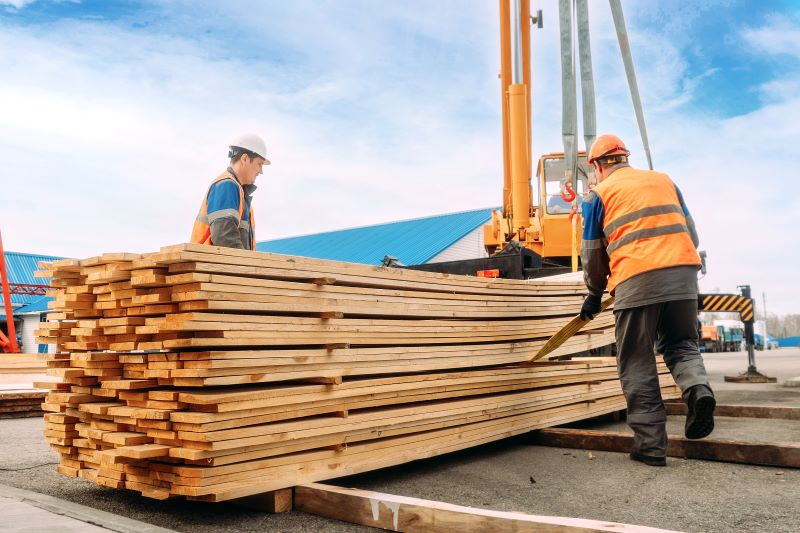
Yes, we now have:
- Tower cranes
- Ready-mix concrete
- Automatic bar bending machines
- Hydraulic lifts
- Power tools
But machines only help if the system around them works smoothly.
On most sites, problems look like this:
- Workers waiting for material
- Engineers waiting for approvals
- Labour strength changing daily
- Poor site supervision
- Last-minute design changes
If coordination fails, machines sit idle.
And an idle machine does not improve construction productivity.
2. Labour Instability Slows Everything Down

One of the biggest reasons productivity hasn’t improved is unstable labour attendance.
On paper, 30 workers are assigned.
In reality:
- 5 leave for another site
- 3 don’t show up after a festival
- 2 shift because someone offered ₹50 extra
Now the site runs at 60–70% strength.
Even the best machines cannot compensate for manpower instability.
Construction productivity depends heavily on skilled labour consistency — something the industry still struggles with.
3. Most Construction Is Still Informal
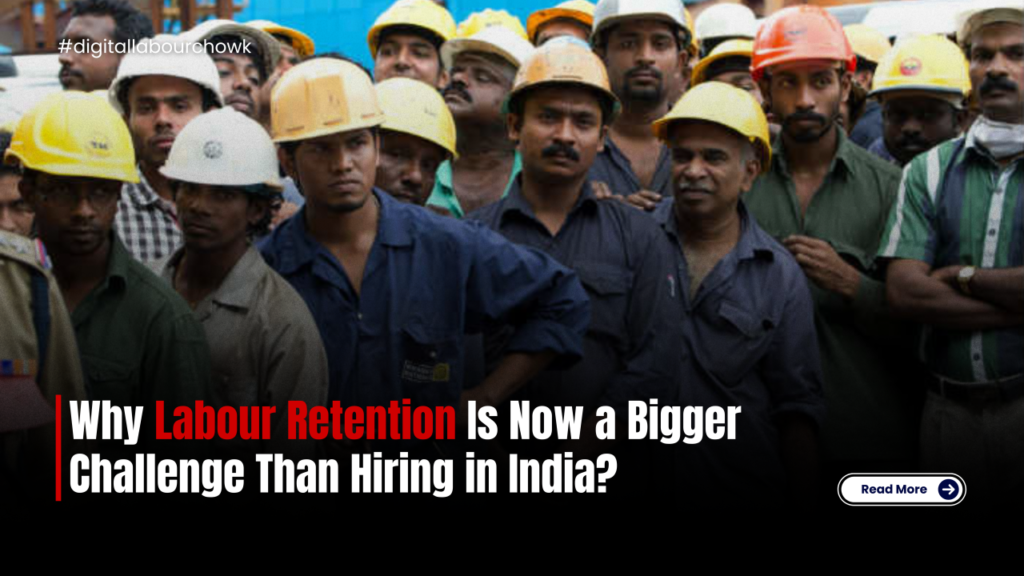
In India and many developing countries, construction hiring remains informal.
Workers are hired through:
- Labour chowks
- Middlemen
- Phone calls
- Verbal commitments
There is no structured system.
No data tracking.
No attendance analytics.
No performance measurement.
Without data, improvement becomes guesswork.
And without systems, productivity remains stagnant.
4. Rework Eats Productivity
Another silent killer of construction productivity is rework.
Rework happens when:
- Measurements are wrong
- Drawings are misunderstood
- Work is not supervised properly
- Quality checks are delayed
Imagine this:
10 workers finish plastering.
Next day, it’s rejected.
They redo the entire section.
Two days of work becomes four.
Machines didn’t fail. The system did.
Rework quietly destroys productivity numbers.
5. Fragmented Project Planning
Construction projects involve:
- Owners
- Consultants
- Architects
- Contractors
- Subcontractors
- Labour teams
Unlike manufacturing, where everything happens in one factory, construction is fragmented.
Each stakeholder works independently.
Small communication gaps cause:
- Delays
- Idle time
- Overlapping work
- Misalignment
Machines cannot solve communication problems.
That’s why construction productivity remains slow compared to centralized industries.
6. Weather and Site Conditions

Construction is not done inside air-conditioned factories.
It happens:
- Under extreme heat
- During heavy rain
- On uneven land
- In congested urban areas
Site conditions change constantly.
Machines can assist, but they cannot eliminate environmental constraints.
This makes productivity inconsistent.
7. Lack of Skill Upgradation
New machines require trained operators.
But many sites:
- Don’t invest in training
- Assume workers will “figure it out”
- Avoid structured skill development
As a result:
Advanced equipment gets used like basic tools.
When skills don’t improve, construction productivity doesn’t improve either.
8. Technology Adoption Is Surface-Level
Many companies say they are “modern.”
They use:
- WhatsApp groups
- Excel sheets
- Basic billing software
But real productivity improvement requires:
- Data-driven workforce planning
- Attendance tracking
- Task-based performance monitoring
- Structured hiring systems
Without process transformation, machines alone cannot change outcomes.
9. Productivity Is Rarely Measured Properly
In manufacturing, productivity is tracked daily.
In construction?
Most contractors focus on:
- Total project cost
- Overall timeline
But they rarely measure:
- Output per worker
- Output per crew
- Daily performance trends
What you don’t measure, you cannot improve.
And that is one of the biggest reasons construction productivity has stagnated.
10. Construction Is Still Labour-Driven
Unlike factories, construction is highly labour-intensive.
Even with machines:
- Brickwork is manual
- Finishing is manual
- Plumbing alignment is manual
- Tiling is manual
Machines assist, but human skill dominates.
And when labour systems remain unorganized, productivity struggles.
The Real Issue: Systems, Not Machines
Here’s the uncomfortable truth:
Construction productivity hasn’t improved because the system hasn’t improved.
We upgraded tools.
We didn’t upgrade processes.
We bought machines.
We didn’t stabilize labour.
We adopted software.
We didn’t change behaviour.
Productivity is not about equipment.
It’s about coordination, consistency, and clarity.
What Needs to Change?
If the industry truly wants better construction productivity, it must focus on:
- Structured labour hiring systems
- Attendance stability
- Skill mapping
- Task clarity
- Real-time monitoring
- Reduced dependency on middlemen
- Accountability at every level
Machines are enablers.
Systems are multipliers.
Without fixing the foundation, productivity will remain slow — no matter how advanced equipment becomes.
Final Thoughts
For 30 years, the industry believed that better machines would automatically improve construction productivity.
But machines don’t solve:
- Human instability
- Poor planning
- Communication gaps
- Informal hiring systems
Construction productivity will improve only when labour systems become organized and measurable.
Until then, projects will continue to depend more on manpower management than mechanical advancement.