Book Appointment Now

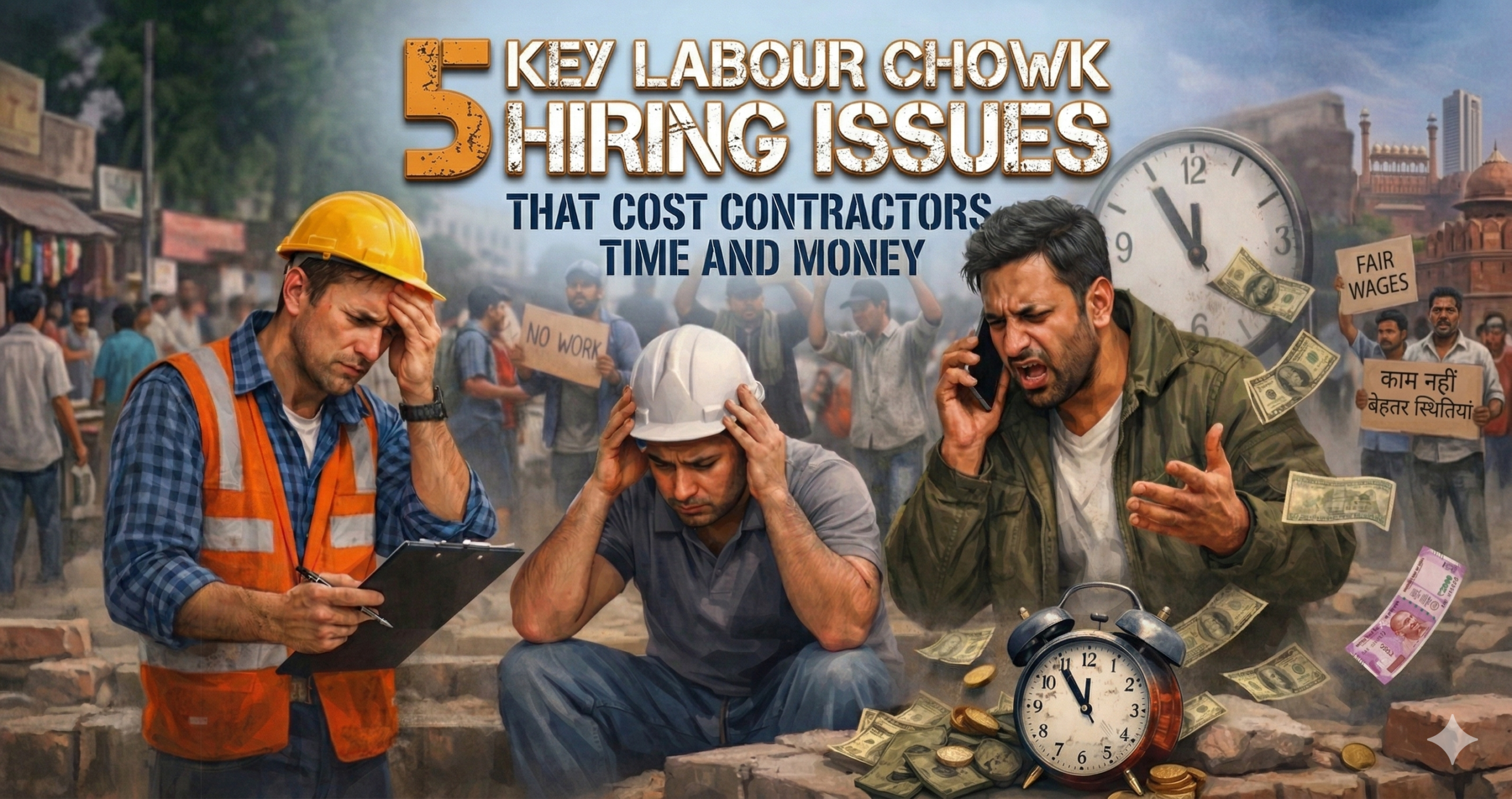
5 Key Labour Chowk Hiring Issues That Cost Contractors Time and Money
In India’s construction and infrastructure sector, time, labour, and cost are inseparable. A single day of delay can cascade into missed deadlines, idle machinery, and rising expenses. Yet, despite these risks, a large number of contractors still depend on unorganised labour hiring through traditional labour chowks.
What looks like a familiar and low-cost system on the surface often hides deep inefficiencies. Understanding labour chowk hiring issues is essential for contractors who want to deliver projects on time, protect margins, and scale sustainably.
The Reality of Labour Chowk Hiring in India
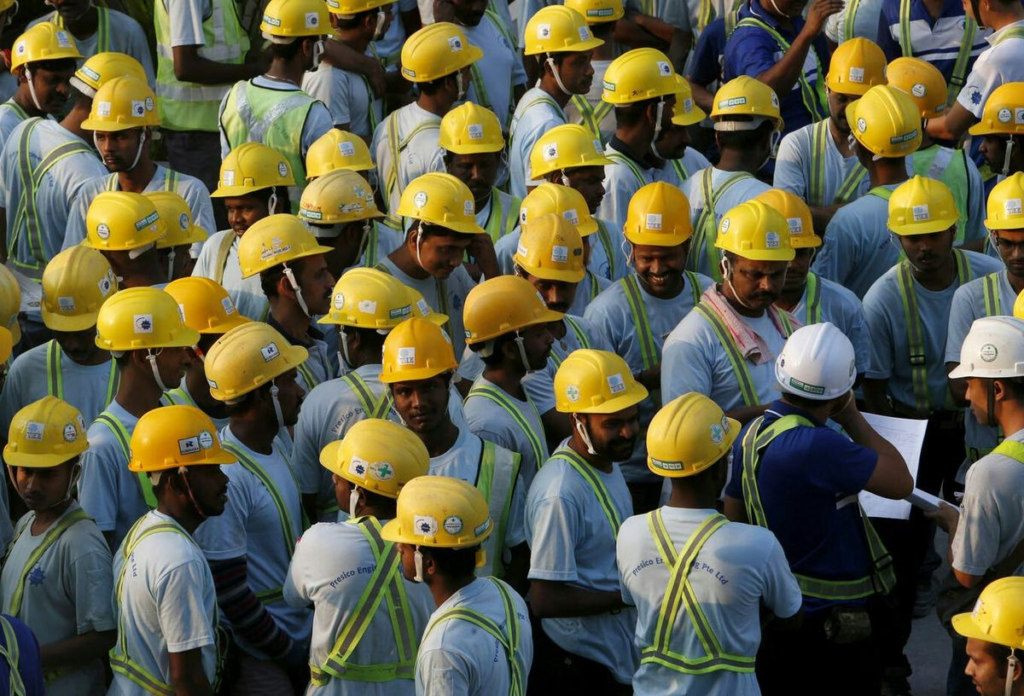
Labour chowks are informal hiring points where daily-wage workers gather each morning hoping to find work. For decades, this system has been the backbone of India’s construction workforce.
For workers, it means uncertainty and lost dignity.
For contractors, it means unpredictability, wasted time, and financial leakage.
As project sizes increase and timelines tighten, the limitations of this system become more visible—and more costly.
Key Labour Chowk Hiring Issues Contractors Face

1. Uncertainty in Workforce Availability
One of the biggest labour chowk hiring issues is the lack of predictability. Contractors cannot reliably answer:
- How many workers will be available today?
- Will the same workers return tomorrow?
- Do they have the required skills for the job?
This makes workforce planning extremely difficult, especially for medium and large projects that require continuity.
2. Daily Loss of Productive Time
Contractors or site supervisors often spend hours every morning:
- Visiting multiple labour chowks
- Negotiating daily wages
- Assessing workers informally
This time loss repeats daily and directly affects site productivity. Instead of focusing on execution and supervision, contractors are stuck firefighting manpower gaps.
3. No Skill or Reliability Verification
At a labour chowk, there is no structured system to verify:
- Skill level
- Work experience
- Past attendance or reliability
As a result, mismatched hiring is common, leading to:
- Rework and quality issues
- Increased supervision costs
- Slower execution
These hidden costs quietly inflate project budgets.
4. Dependence on Middlemen
Many labour chowks function through informal middlemen who:
- Control access to workers
- Influence wage negotiations
- Charge hidden commissions
This reduces transparency, increases labour costs, and weakens trust—making middlemen dependency one of the most damaging labour chowk hiring issues for contractors.
5. High Absenteeism and Attrition
Because hiring is informal and day-to-day:
- Workers frequently switch sites
- Attendance is inconsistent
- Accountability is limited
Contractors are forced to repeat the hiring process again and again, disrupting work continuity and timelines.
The Real Financial Impact of Unorganised Labour Hiring
Labour chowk hiring issues don’t just slow projects—they directly affect profitability.
Contractors often face:
- Project delays due to labour shortages
- Higher labour costs from inefficiencies
- Penalties for missed deadlines
- Increased supervision and rework expenses
What appears to be “cheap labour” often becomes expensive when these indirect costs are considered.
How Labour Chowk Hiring Disrupts Project Timelines

In construction, delays compound quickly. A single day of labour shortage can:
- Halt dependent activities
- Leave machinery and materials idle
- Push delivery schedules further
Repeated manpower disruptions can also impact a contractor’s credibility, affecting future project opportunities.
Why the Traditional System No Longer Works at Scale
India’s construction industry is evolving rapidly. Today’s projects demand:
- Large-scale workforce planning
- Faster mobilisation
- Multi-location execution
- Better compliance and documentation
The traditional labour chowk system was never designed to support this level of complexity. Continuing to rely on it puts contractors at a clear disadvantage.
The Shift Towards Organised Labour Hiring
To overcome labour chowk hiring issues, forward-thinking contractors are now moving towards organised, digital labour solutions.
Digital Labour Chowk is built to bridge this exact gap.
As an organised workforce platform, Digital Labour Chowk:
- Connects verified daily-wage workers with contractors
- Enables faster and more reliable hiring
- Reduces dependency on middlemen
- Brings structure, continuity, and transparency to labour sourcing
Instead of workers waiting at chowks, work reaches workers through their phones—and contractors get dependable manpower without daily uncertainty.
Conclusion: Time and Money Demand a Better System

Labour chowks have played a historical role in India’s workforce ecosystem, but their limitations are now undeniable. For contractors, the cost of unorganised labour hiring is no longer just operational—it is strategic.
By addressing labour chowk hiring issues through organised platforms like Digital Labour Chowk, contractors can:
- Save time
- Reduce hidden costs
- Improve execution speed
- Deliver projects with greater confidence
In an industry where margins are tight and timelines matter, modernising labour hiring is no longer optional—it’s essential.