Book Appointment Now

Payment of Wages Act,1936 Explained: 7 Powerful Rules You Must Know Today
Timely and fair payment of wages is one of the most basic rights of workers. In India, this right is protected by the Payment of Wages Act, 1936, one of the oldest and most important labour laws in the country. Even today, it plays a key role in regulating salary payment law in India, especially for blue-collar and daily-wage workers.
With changing work patterns, digital salary payments, and the introduction of the Code on Wages, many employers and workers are confused about what rules still apply and what has changed. This blog explains the Payment of Wages Act 1936, its penalties, wage deduction rules in India, and how it compares with the Code on Wages.
What Is the Payment of Wages Act, 1936?
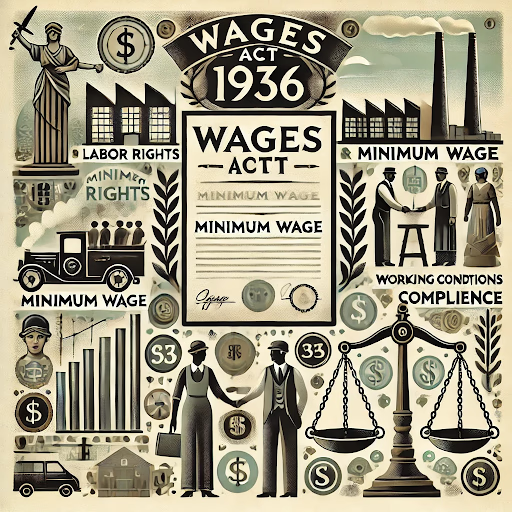
The Payment of Wages Act, 1936 was enacted to ensure that workers receive their wages:
- On time
- Without unauthorised deductions
- Through a transparent process
Before this law, workers often faced delayed payments, arbitrary fines, and unfair deductions. The Act was introduced to stop these practices and create accountability for employers.
Unlike minimum wage laws, which focus on how much workers should be paid, this Act focuses on how and when wages are paid.
Who Is Covered Under the Payment of Wages Act?
The Act applies to employees working in:
- Factories
- Railways
- Industrial and non-industrial establishments notified by the government
It primarily protects wage earners rather than senior managerial employees. Over time, states have expanded its coverage to include more establishments.
Even today, the Payment of Wages Act 1936 remains a key reference point for salary payment disputes in India.
Salary Payment Law in India: Key Rules Under the Act
1. Wage Period
Under the Payment of Wages Act:
- Wage periods cannot exceed one month
- Employers must clearly define whether wages are paid daily, weekly, fortnightly, or monthly
This ensures workers are not forced to wait indefinitely for their earnings.
2. Time Limit for Payment of Wages
The Act strictly defines timelines for wage payment:
- Daily wages: Same day or next working day
- Weekly wages: Last working day of the week
- Fortnightly wages: Within two working days of the end of the period
- Monthly wages: On or before the 7th day of the following month
- On termination: Final wages must be paid within two working days
These timelines form the backbone of salary payment law in India and are often cited in labour disputes.
3. Mode of Payment
Originally, wages were paid only in cash. However, amendments now allow payment through:
- Cash
- Cheque
- Bank transfer (digital payment)
In fact, many establishments are encouraged—or required—to use digital payments to improve transparency.
Wage Deduction Rules in India
One of the most important protections under the Act relates to wage deduction rules in India. Employers cannot deduct wages arbitrarily.
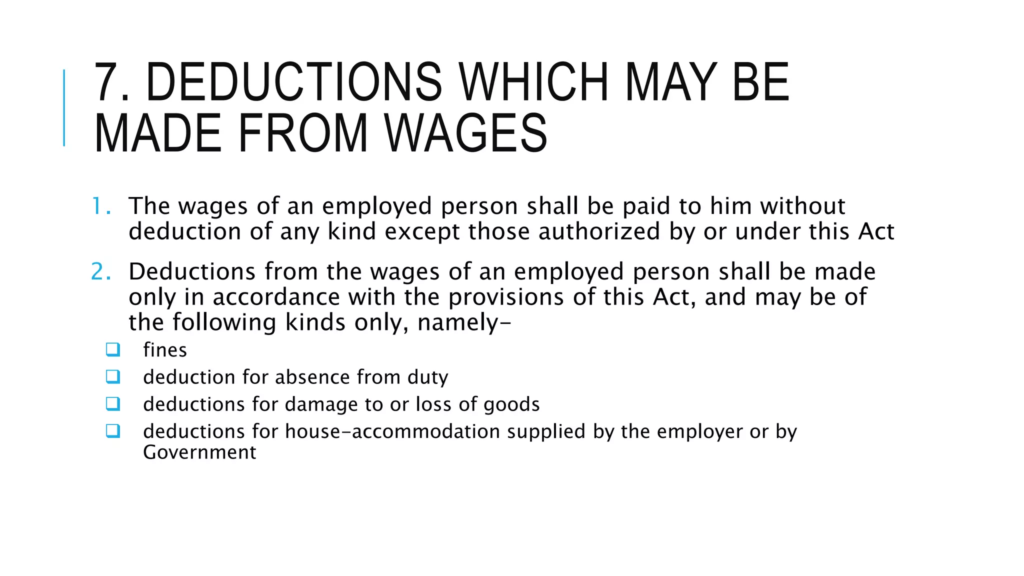
1. Permitted Deductions Include:
- Absence from duty
- Fines (under strict conditions)
- Damage or loss caused by the worker
- House rent or services provided by the employer
- Recovery of advances or loans
- Statutory deductions (PF, ESI, income tax, etc.)
2. Limits on Deductions
- Total deductions generally cannot exceed 50% of wages
- In some cases involving cooperative society recoveries, the limit may go up to 75%
- Fines cannot exceed 3% of wages for a wage period
Any deduction outside these rules is illegal and punishable.
Payment of Wages Act Penalties
The Payment of Wages Act penalties are designed to discourage employers from violating wage laws.
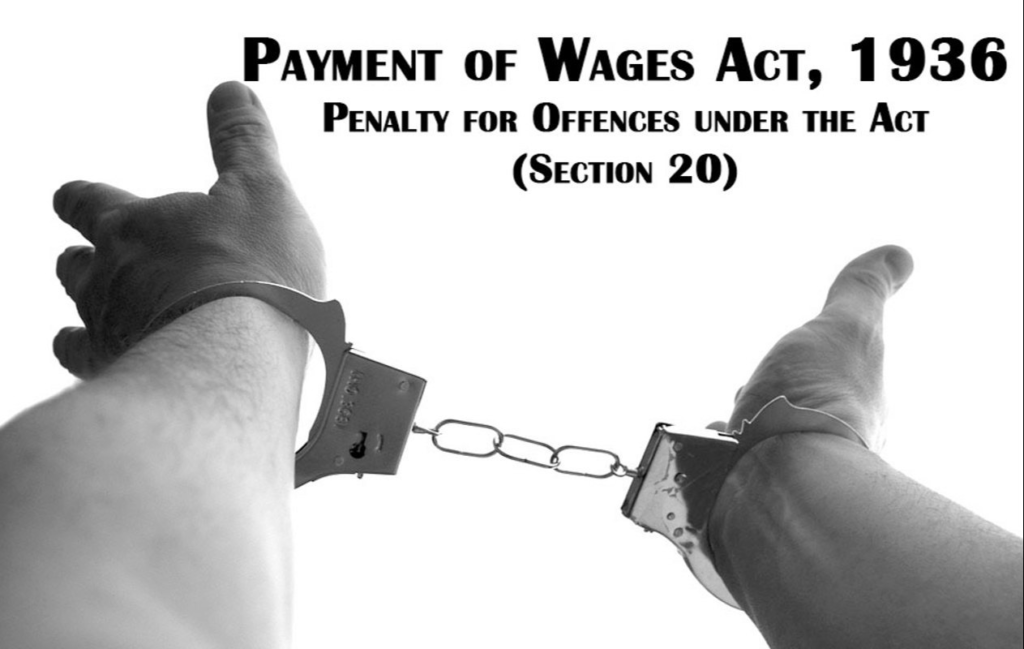
Common Violations Include:
- Delayed payment of wages
- Illegal wage deductions
- Non-payment of wages
- Failure to maintain wage records
- Improper fines or deductions
Penalties for Employers
- First offence: Fine ranging from ₹1,500 to ₹7,500
- Repeat offence (within two years):
- Imprisonment from 1 to 6 months
- Fine up to ₹22,500
Additional daily fines may be imposed if wages remain unpaid even after legal orders.
These penalties make the Act a strong enforcement tool rather than just a guideline.
How Can Workers Claim Unpaid Wages?
Workers can file a claim before the designated authority (usually a labour officer) if they face:
- Delay in salary payment
- Unauthorised wage deductions
- Non-payment of full wages
The authority can order payment of due wages along with compensation. Importantly, civil courts generally do not handle these matters—the Act provides a dedicated mechanism for speedy resolution.
Code on Wages vs Payment of Wages Act
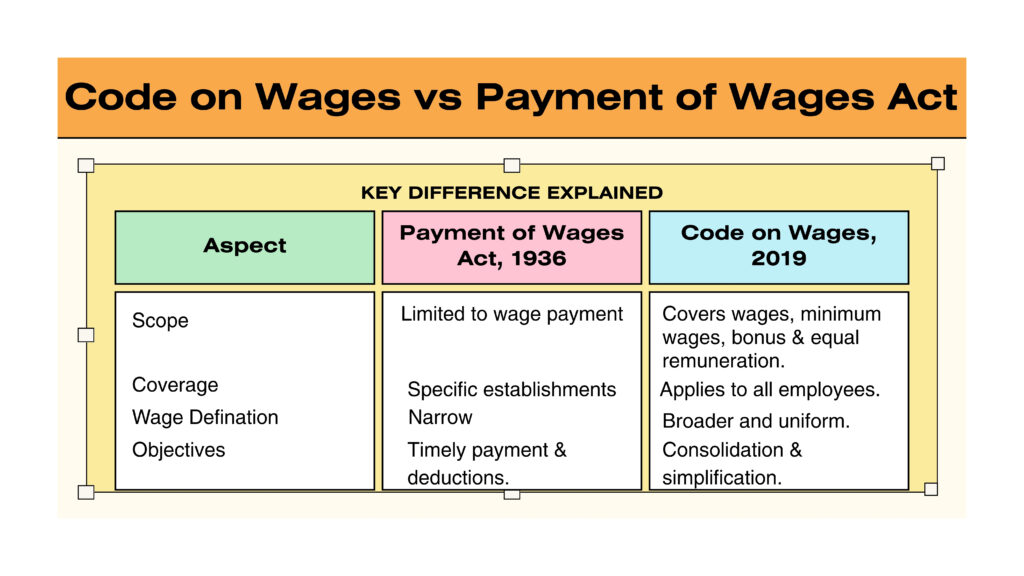
One of the biggest recent developments in Indian labour law is the introduction of the Code on Wages, 2019. This has raised many questions about Code on Wages vs Payment of Wages Act.
Current Status
Although the Code on Wages is meant to replace the Payment of Wages Act, full implementation across all states is still in progress. Until then, the Payment of Wages Act 1936 continues to govern wage payment issues.
In practice, many salary payment rules under the Code—such as the 7th-day payment timeline—already reflect standards from the older Act.
Why This Law Still Matters Today

Despite being enacted in 1936, the Act remains extremely relevant:
- Gig and contract workers still face delayed payments
- Wage deductions are common in informal employment
- Small contractors and establishments often ignore legal timelines
Understanding salary payment law in India helps both workers and employers avoid disputes, penalties, and exploitation.
Conclusion
The Payment of Wages Act, 1936 is a foundational pillar of Indian labour legislation. It ensures timely salary payments, restricts unfair wage deductions, and imposes strict penalties for violations. While the Code on Wages aims to modernize and consolidate labour laws, the principles of the Payment of Wages Act continue to guide wage protection in India.
For workers, the Act is a shield against delayed and unfair pay. For employers, compliance is not just a legal requirement—it’s a foundation for trust, stability, and ethical business practice.