Book Appointment Now

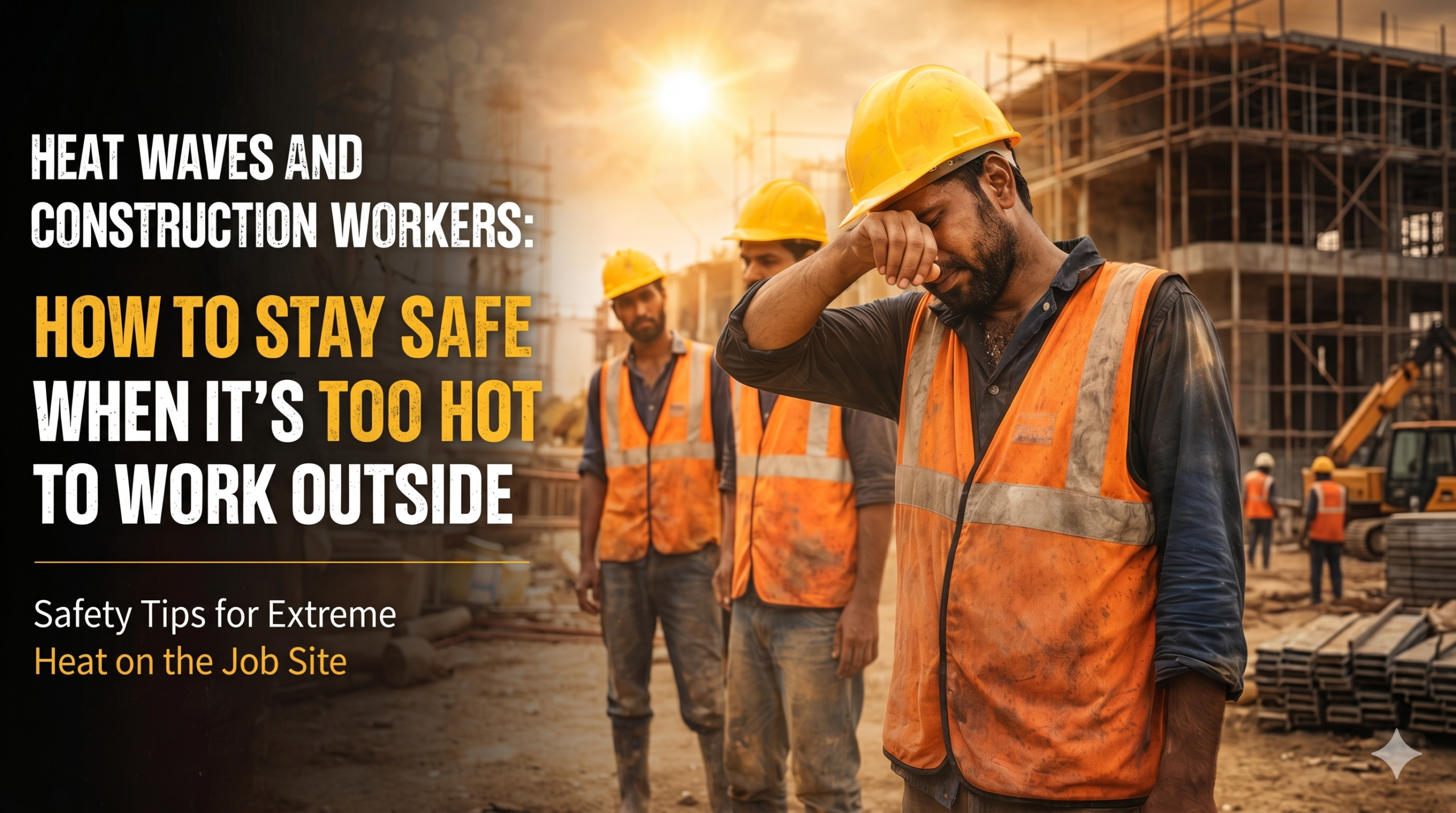
Heat Waves and Construction Workers: How to Stay Safe When It’s Too Hot to Work Outside
- “Heat waves kill more outdoor workers than most people realize. Here’s what you need to know to stay safe on the job site.”
- No deadline is worth someone’s life. Heat waves are getting worse every year. Know the signs, take breaks, drink water, and look out for the person next to you.
- Track the forecast daily. Have a heat action plan. Provide shade, cold water, and regular breaks. OSHA holds employers responsible for worker safety in extreme heat. When the heat index tops 103°F, reduce workloads. Above 115°F, stop outdoor work.
What Is a Heat Wave?
A heat wave is a period of unusually hot weather that lasts for two or more days. Temperatures during a heat wave can soar well above normal, and when you add high humidity, it feels even hotter than what the thermometer says. For most people, a heat wave means turning up the AC. But for construction workers, it means spending hours under the open sky, doing physically demanding work in dangerous conditions.
Why Construction Workers Are at the Highest Risk
Construction workers face a unique set of challenges during heat waves. They work outdoors with little to no shade, often on surfaces like concrete and asphalt that absorb and reflect heat. They wear heavy protective gear and carry heavy loads. They work long shifts, sometimes starting early to “beat the heat” — but by midday, conditions can become life-threatening.
According to occupational health experts, construction is consistently one of the top industries for heat-related illness and death. The combination of physical exertion, direct sun exposure, and dehydration makes workers highly vulnerable.

Common Heat-Related Illnesses to Know
Understanding the warning signs can save lives. These are the three most common heat illnesses on construction sites:
Heat cramps are muscle pains or spasms caused by heavy sweating and loss of salt. They’re an early warning sign that the body is struggling.
Heat exhaustion is more serious. Signs include heavy sweating, weakness, cold or pale skin, a fast or weak pulse, nausea, and fainting. A worker experiencing this needs to move to a cool place immediately and drink water.
Heat stroke is the most dangerous. The body temperature rises above 103°F (39.4°C), sweating may stop, and the person may become confused or unconscious. This is a medical emergency.
Top Safety Tips for Working in Extreme Heat
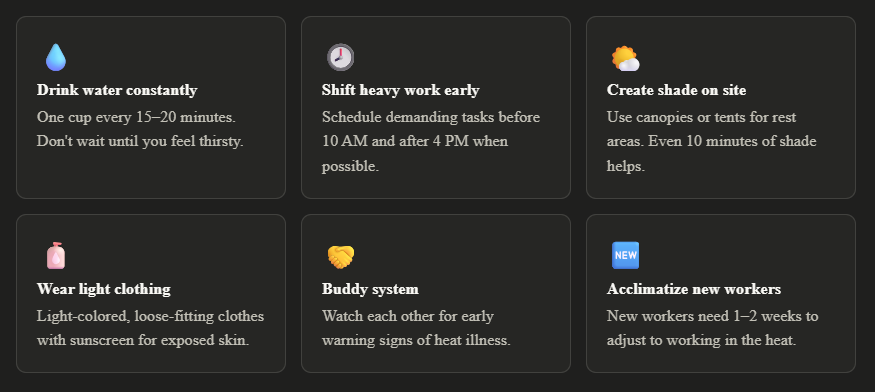
Here are practical steps workers and site managers can take to reduce the risk during a heat wave:
What Site Managers Must Do
Safety on a heat wave day starts at the top. Site managers should monitor weather forecasts daily during summer months and have a heat action plan ready. This means knowing when to reduce workload, when to increase break frequency, and when to halt work altogether.
OSHA’s Heat Illness Prevention campaign reminds employers that they are legally responsible for providing a safe work environment. This includes access to shade, cool drinking water, and training for all workers on heat illness prevention.
On days when the heat index exceeds 103°F (39.4°C), work should be restructured significantly. When it crosses 115°F (46°C), outdoor work should ideally stop unless it’s an emergency.
A Final Word: Your Life Is Worth More Than a Deadline
No project timeline is worth a human life. Heat waves are becoming more frequent and more intense due to climate change, which means construction sites need to take heat safety more seriously than ever before. Workers should feel empowered to speak up when conditions feel unsafe — and managers should create a culture where that’s not just allowed, but encouraged.
Stay hydrated. Take breaks. Watch out for your fellow workers. And remember: the smartest thing you can do on a dangerously hot day is know when to stop.