Book Appointment Now

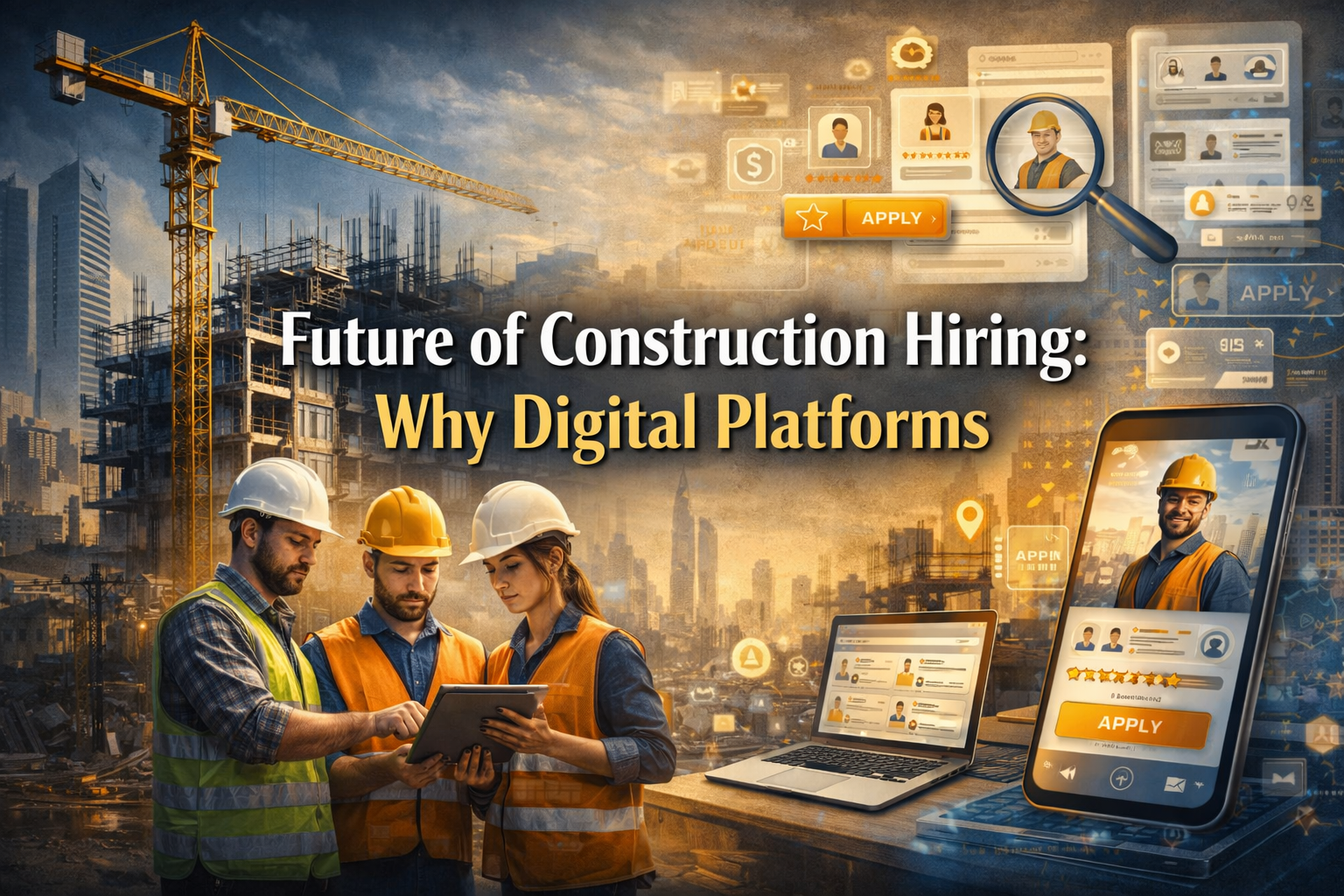
Future of Construction Hiring: Why Digital Platforms
Future of construction hiring is being reshaped by technology and digital innovation.
The construction industry is changing rapidly. Projects are getting bigger. Deadlines are tighter. Labour demand is increasing every day. Yet one major challenge still remains — finding the right workers at the right time.
For years, contractors have relied on middlemen, local contacts, and word-of-mouth hiring. While this traditional system worked earlier, it is slow, unorganized, and often unreliable in today’s fast-moving market.
That’s where digital labour platforms come in — transforming how contractors hire and redefining the future of construction hiring.
Let’s understand why this shift is happening
The Traditional Hiring Problem in Construction

Construction hiring has always been informal.
Most contractors:
- Call labour contractors or agents
- Rely on referrals
- Hire workers without proper verification
- Face last-minute worker shortages
- Struggle with attendance and payment tracking
This creates serious issues:
- Project delays
- Cost overruns
- Low productivity
- Trust problems between workers and contractors
In a growing economy like India, this system is no longer sustainable.
What Is a Digital Labour Platform?
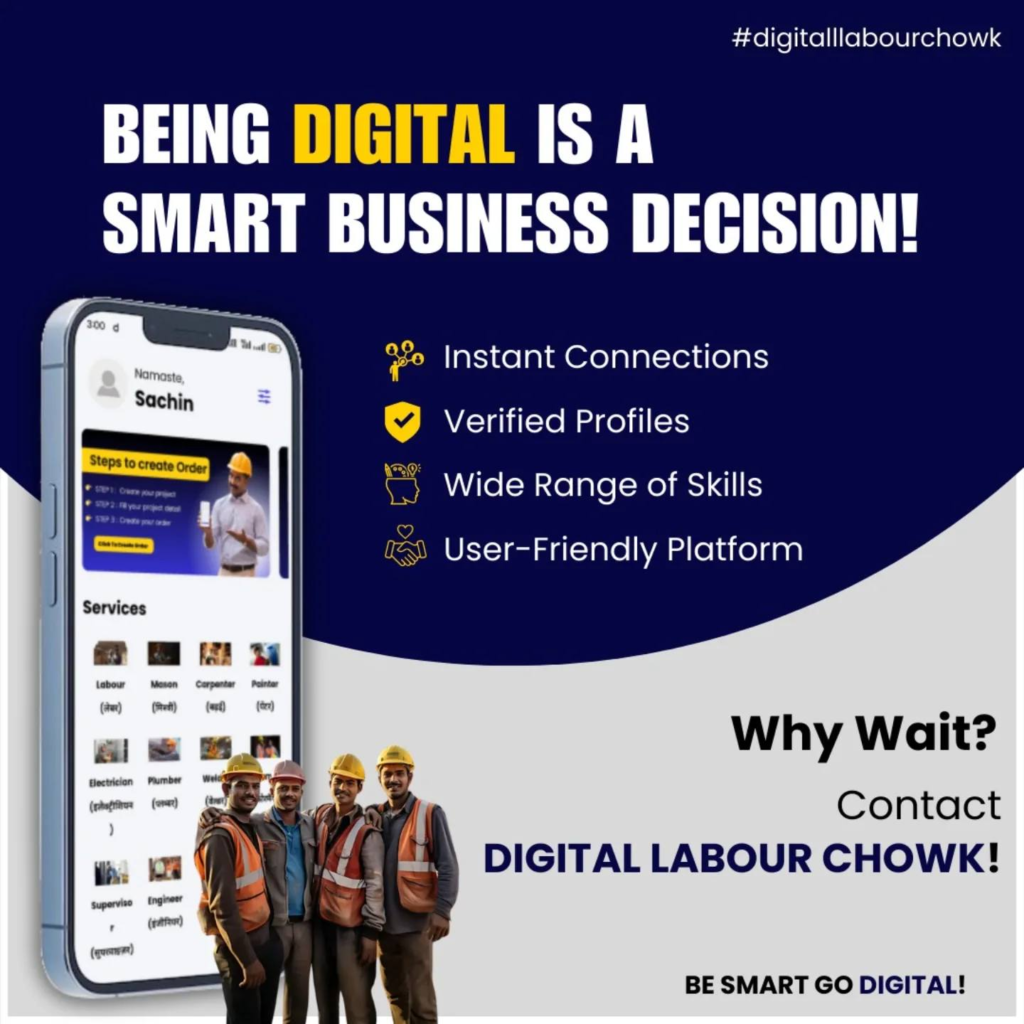
A digital labour platform is an online system that connects contractors directly with skilled and unskilled workers.
Instead of depending on middlemen, contractors can:
- Search workers online
- View profiles
- Check skills and experience
- Contact directly
- Hire faster
Workers can:
- Create their profile
- Show their skills
- Get job opportunities
- Connect with verified contractors
It brings transparency, speed, and efficiency into the hiring process.
Why Digital Labour Platforms Are the Future
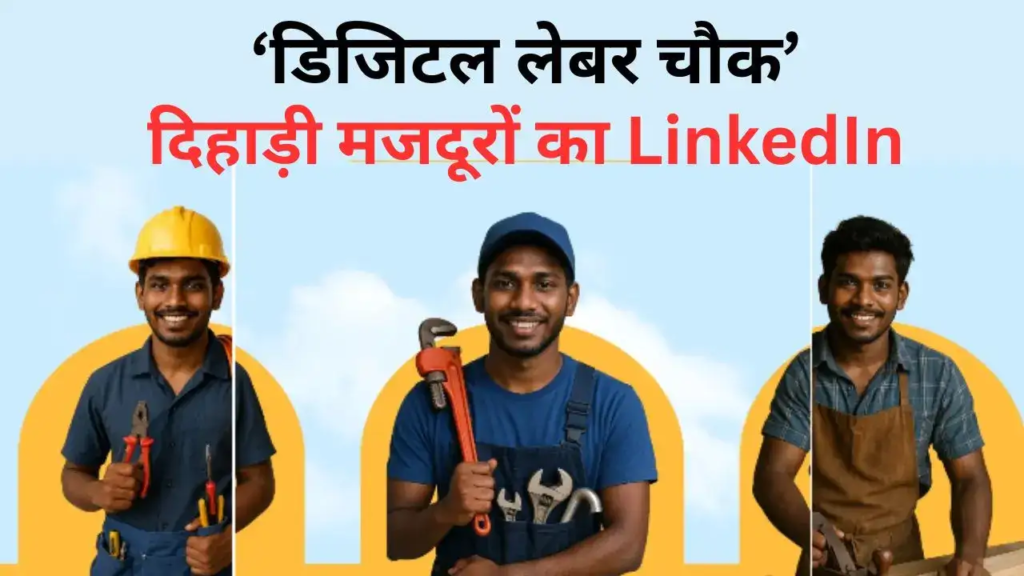
1. Faster Hiring
Time is money in construction.
With digital platforms, contractors don’t have to spend days calling multiple agents. They can find workers instantly through a mobile app or website.
This reduces downtime and keeps projects moving.
2. Wider Talent Pool
Earlier, hiring was limited to local areas.
Digital platforms remove location barriers. Contractors can:
- Access workers from different regions
- Hire for short-term or long-term projects
- Find specialized skills easily
This flexibility is a game changer.
3. Better Transparency
One of the biggest problems in construction hiring is lack of transparency.
Digital platforms allow:
- Verified worker profiles
- Clear skill details
- Direct communication
- Reduced dependency on middlemen
This builds trust between workers and employers.
4. Cost Efficiency
Middlemen commissions increase hiring costs.
Digital labour platforms reduce:
- Agent fees
- Delays
- Miscommunication
In the long run, contractors save money and workers get fair opportunities.
5. Organized Workforce System
India’s construction sector is still largely unorganized.
Digital hiring platforms help:
- Formalize worker records
- Improve workforce tracking
- Build long-term worker databases
- Enable better workforce planning
As the industry grows, organization becomes necessary.
The Role of Digital Labour Chowk
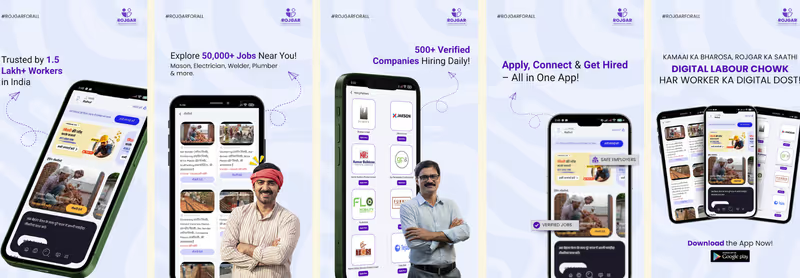
One example of this transformation is , a digital labour platform built specifically for the construction industry.
It aims to:
- Connect contractors and workers directly
- Make hiring faster and easier
- Reduce dependency on traditional middlemen
- Bring transparency into labour hiring
By using platforms like Digital Labour Chowk, contractors can modernize their hiring process and workers can access better job opportunities.
This is not just technology — it is a structural shift in how construction hiring works.
The Future of Construction Hiring in India
India’s construction market is expanding rapidly with:
- Infrastructure growth
- Smart cities
- Highway projects
- Metro expansions
- Private real estate development
With this growth, labour demand will continue to rise.
Traditional hiring methods will struggle to keep up.
Digital labour platforms will become essential because they:
- Improve speed
- Increase efficiency
- Reduce costs
- Build trust
- Organize the workforce
Just like online marketplaces changed retail, digital labour platforms are changing construction hiring.
Final Thoughts
The construction industry cannot depend on outdated hiring systems forever.
As projects grow and competition increases, contractors need smarter hiring solutions.
Digital labour platforms are not just a trend — they are the future.
Platforms like Digital Labour Chowk are leading this change by making labour hiring faster, more transparent, and more efficient.
The companies that adapt early will gain a major advantage.
The future of construction hiring is digital — and it has already begun.
[…] This clearly shows that skill matters far more than gender in modern construction. […]