Book Appointment Now
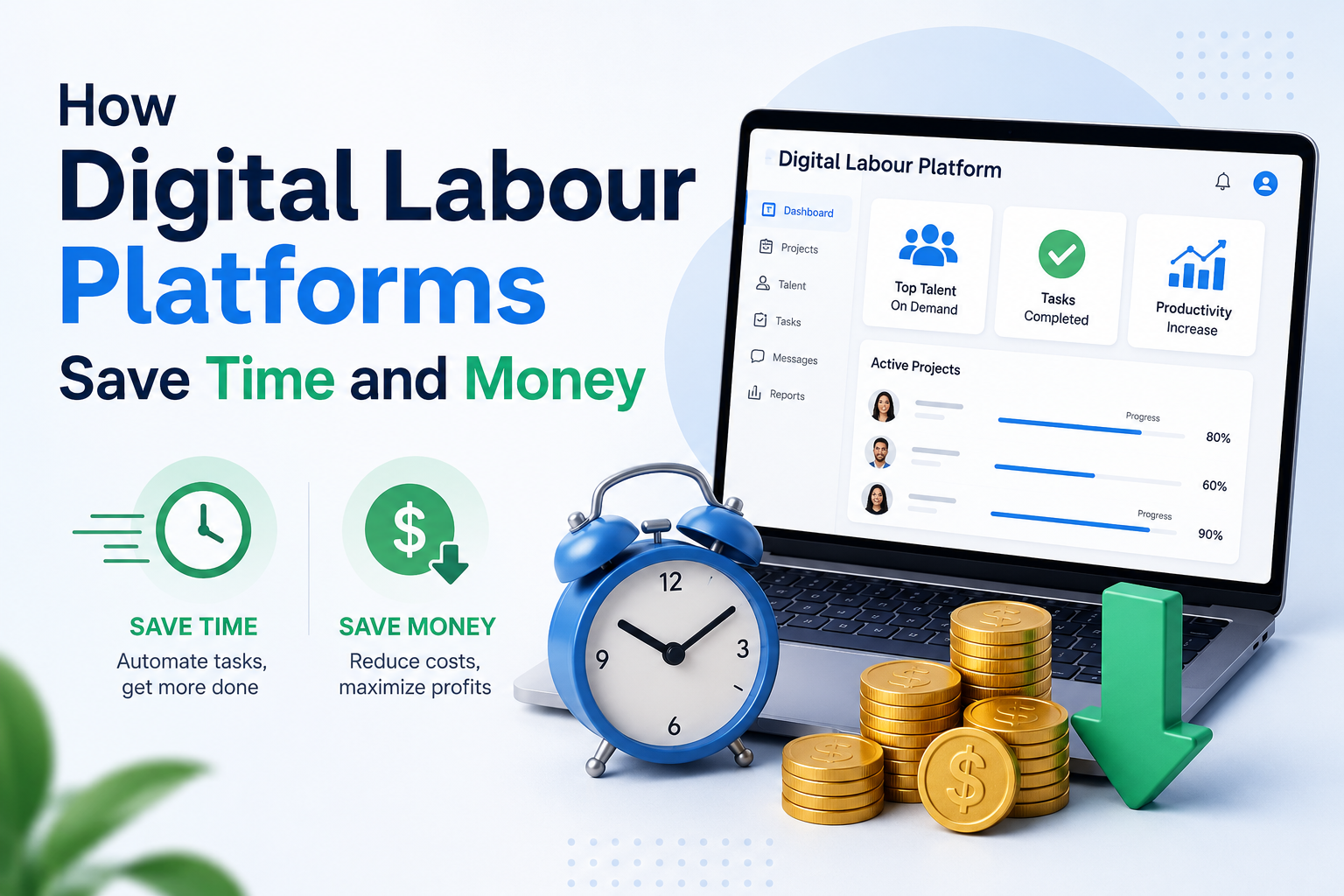
How Digital Labour Platforms Save Time and Money
Running a business today means juggling dozens of tasks — hiring, payroll, project management, customer support, and more. Not too long ago, handling all of this meant long phone calls, paper trails, and a lot of waiting around. Today, digital labour platforms have changed that completely.
If you’re wondering what these platforms actually do, and how they can save your business real time and money, this guide breaks it down in simple terms.
What Are Digital Labour Platforms?

A digital labour platform is simply an online system that connects employers with workers, freelancers, or service providers — without the usual paperwork and middlemen. Think of platforms used for freelance hiring, gig work, remote staffing, or even task-based outsourcing.
Instead of posting a job in a newspaper or relying on word-of-mouth, businesses can now log into a platform, post what they need, and get matched with the right talent in hours, not weeks.
1. Faster Hiring Means Faster Results
Traditional hiring is slow. You write a job description, post it, wait for applications, screen resumes, schedule interviews — and this can take weeks.
Digital labour platforms speed this up dramatically. Many platforms use smart matching algorithms that connect you with pre-vetted candidates almost instantly. Some platforms even let you hire someone for a single task within the same day.
Time saved: What used to take 2-3 weeks can now take a few hours.
2. Lower Overhead Costs
Hiring a full-time employee comes with costs beyond just salary — office space, equipment, benefits, training, and taxes all add up. Digital labour platforms allow businesses to hire only when needed, for exactly the work required.
This is especially useful for:
- Short-term projects
- Seasonal work
- Specialized skills you don’t need year-round
Instead of paying for a full-time role, you pay for the actual work done — nothing more.
Money saved: Reduced spending on benefits, office infrastructure, and idle time.
3. Access to a Global Talent Pool
Without digital platforms, businesses were often limited to hiring locally. Now, you can find skilled workers from anywhere in the world. This opens the door to:
- More competitive pricing
- Specialized expertise that might not be available locally
- Round-the-clock productivity, thanks to different time zones
A global talent pool means you’re more likely to find the right person for the job — not just the closest available one.
4. Built-In Tools Reduce Admin Work
Most digital labour platforms come with built-in features like:
- Automated invoicing and payments
- Time tracking
- Contract templates
- Messaging and collaboration tools
This removes the need for separate software or manual paperwork. Everything happens in one place, which means less time spent on admin tasks and more time spent on actual work.
5. Easier Scaling Up or Down
Business needs change. Sometimes you need ten extra hands for a big project; other times, you need none. Digital labour platforms make it simple to scale your workforce up or down without the stress of layoffs or lengthy rehiring processes.
This flexibility helps businesses stay lean, especially during uncertain economic periods, without losing productivity.
6. Transparent Pricing and Reviews
Most platforms show transparent pricing upfront, along with ratings and reviews from previous clients. This helps businesses make informed decisions quickly, without the back-and-forth negotiations that used to slow down the hiring process.
It also builds trust — both employers and workers can see track records before agreeing to work together.
7. Reduced Risk of Bad Hires
Hiring the wrong person is costly — not just financially, but in terms of time and team morale. Many digital labour platforms include skill assessments, verified portfolios, and client reviews, helping you make better hiring decisions from the start.
This reduces the chances of a mismatch, saving you from the cost of re-hiring or retraining.
A Quick Example
Imagine a small business needing a logo design, a few blog posts, and someone to manage social media for a month. Doing this the traditional way would mean three separate hiring processes, possibly three different contracts, and weeks of coordination.
With a digital labour platform, the business owner could post all three tasks in one sitting, receive proposals within hours, and have work underway by the next day — all managed through a single dashboard.
Things to Keep in Mind

While digital labour platforms offer real benefits, it’s worth being thoughtful about:
- Communication gaps — remote work needs clear instructions and regular check-ins.
- Quality control — always review portfolios and past work before hiring.
- Data security — make sure sensitive business information is shared securely.
Being aware of these factors helps you get the most out of these platforms without running into avoidable issues.
Final Thoughts
Digital labour platforms aren’t just a trend — they’re reshaping how businesses hire and manage work. By cutting down hiring time, reducing overhead costs, and giving access to global talent, these platforms help businesses of all sizes work smarter, not harder.
Whether you’re a startup trying to stay lean or an established company looking to scale efficiently, digital labour platforms offer a practical way to save both time and money — without compromising on quality.