Book Appointment Now

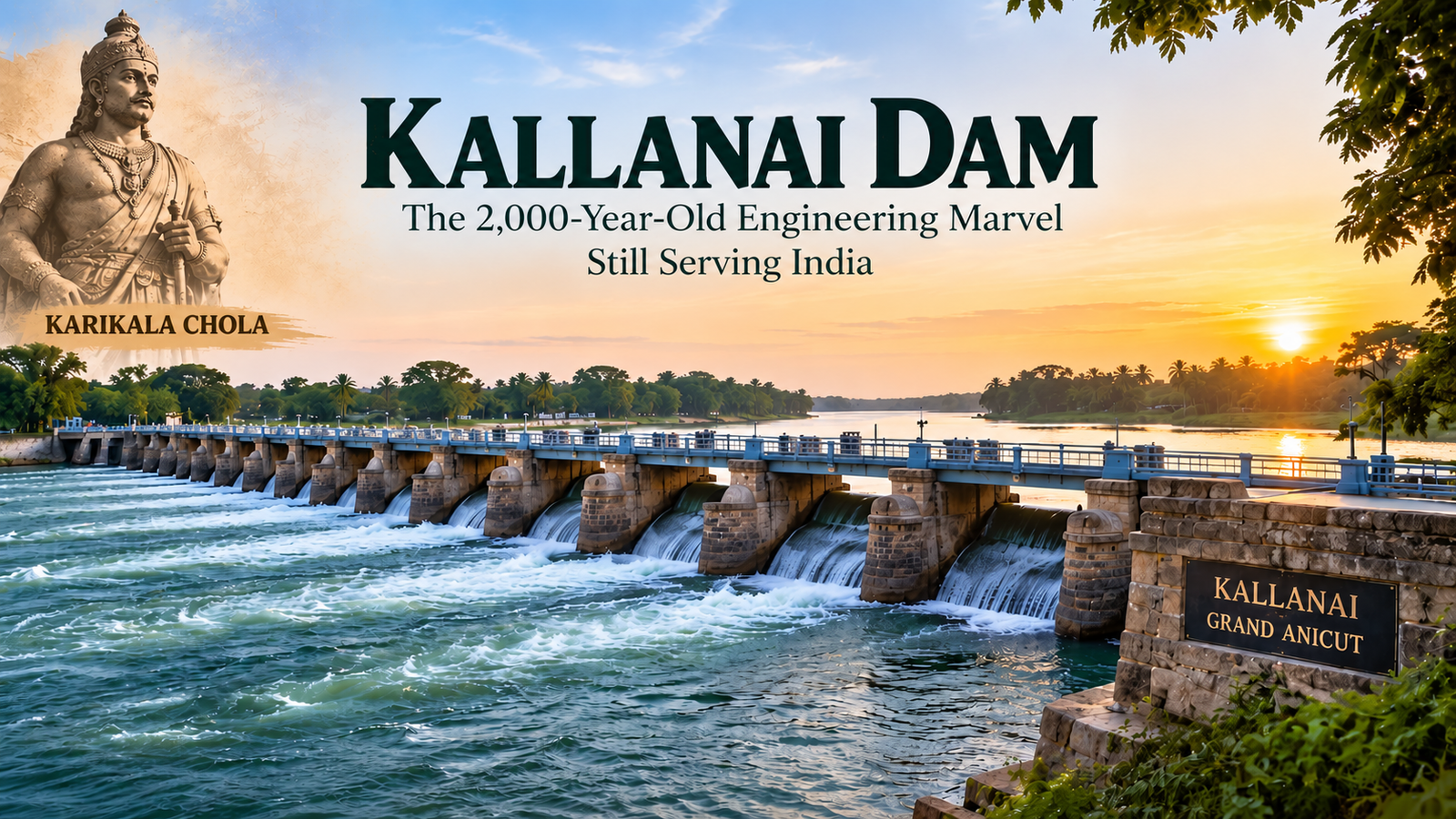
Kallanai Dam: How a 2,000-Year-Old Structure Still Supports Indian Agriculture
Introduction
Somewhere in Tamil Nadu, a structure built before the Fall of Rome is still doing its job today. No steel, no cement, no machines — just stacked stone, river sense, and human effort. And yet, it still feeds water to lakhs of farmers every single year.
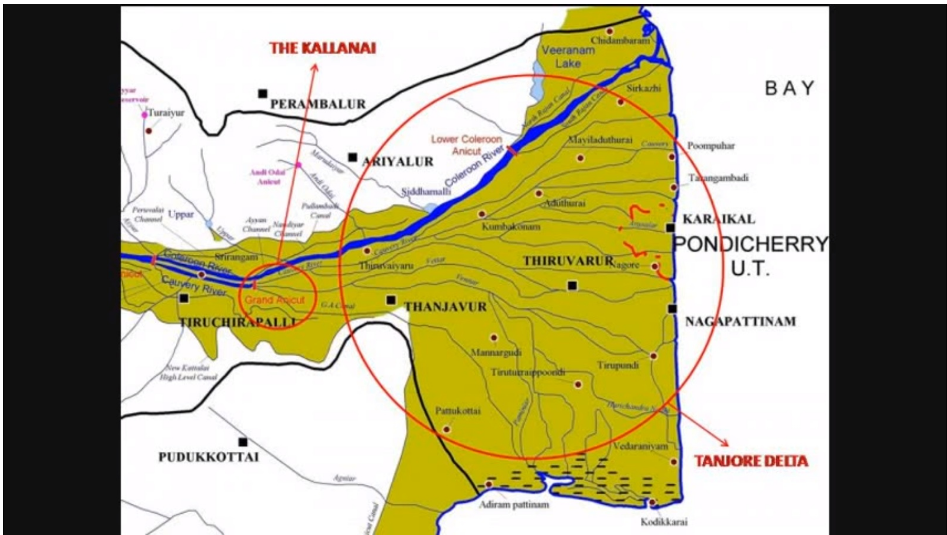
That structure is the Kallanai Dam https://www.incredibleindia.gov.in/en/tamil-nadu/tiruchirappalli/grand-anaicut , also called the Grand Anicut. It has stood across the Kaveri River for close to 2,000 years, quietly outlasting empires, weather, and time itself. In an age where modern infrastructure often struggles to last even a few decades, Kallanai raises an obvious question: how did people manage this without a single machine?
What Is Kallanai Dam?
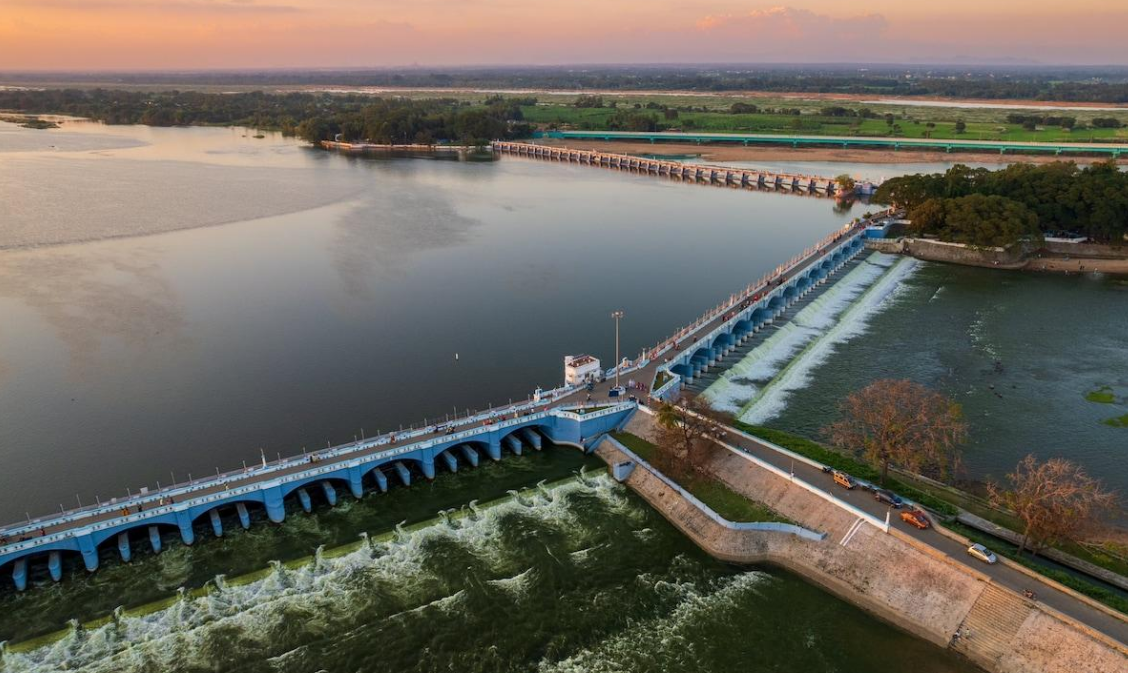
Kallanai, meaning “stone dam” in Tamil, sits across the Kaveri River near Tiruchirappalli in Tamil Nadu. It isn’t a dam in the way we usually imagine one — a tall wall holding back a reservoir. It’s technically an anicut, a low barrier built across a river to raise the water level just enough to divert it into irrigation canals.
The structure stretches roughly 329 metres in length and about 20 metres in width, with a height of around 5 metres. It was built entirely from unhewn (unshaped) stone, without mortar, relying instead on the sheer weight and interlocking of boulders to hold firm against the river’s force.
Today, Kallanai is widely considered one of the oldest water-diversion systems in the world still performing its original function — a claim that places it in the same conversation as ancient hydraulic works from Egypt, Rome, and China.
Who Built Kallanai?
Historical tradition credits Kallanai to Karikala Chola, a powerful ruler of the early Chola dynasty during the Sangam period. Most historical accounts date the structure to around the 2nd century CE, though some sources place its origins slightly earlier. As with many ancient monuments, exact dating relies on a mix of inscriptions, literary references, and archaeological interpretation rather than a single confirmed record — so historians continue to treat the precise timeline with some caution.
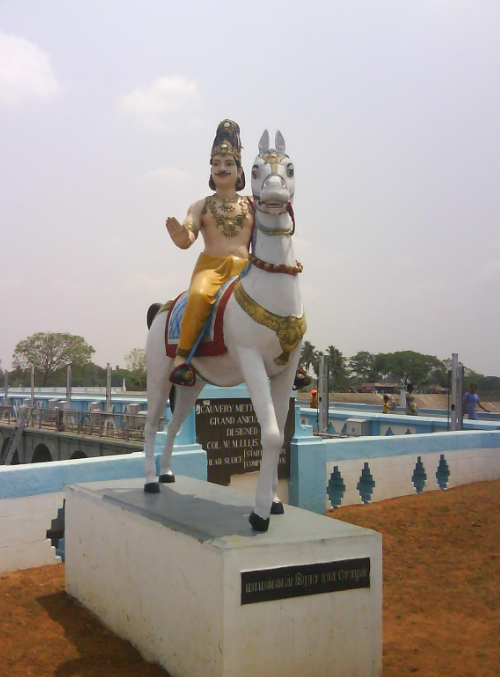
What is agreed upon is the intent behind it. Karikala’s reign is remembered for trade, military expansion, and large public works, and Kallanai reflects a very deliberate decision: use the kingdom’s resources to secure water for agriculture, not just for prestige buildings or monuments. Tamil Sangam literature, describing the prosperity of the Chola kingdom, indirectly supports this picture of an economy anchored in irrigated farming.
How Was Kallanai Built?
There is no surviving construction manual for Kallanai. What we do know comes from its physical structure and from how it has performed over centuries.
Builders used large, unhewn stone blocks and boulders sourced locally, placing them across the riverbed in a manner that let them lock together under their own weight. There was no cement or binding mortar — the stability came from careful placement, understanding of the river’s current, and enormous amounts of coordinated manual labour.
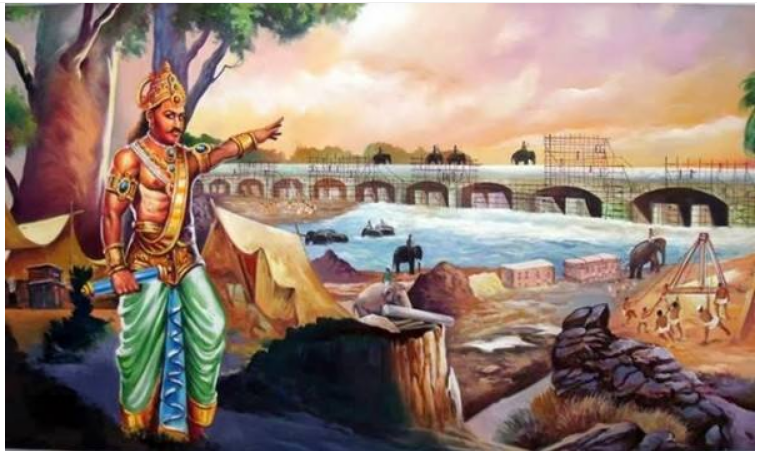
This is important to sit with for a moment. Every single stone at Kallanai was likely selected, moved, and positioned by hand. There were no cranes, no trucks, no hydraulic tools. What existed instead was organised human effort — skilled masons, labourers who understood stone and water, and planners who could read the river’s behaviour across seasons. Building something that would survive monsoon floods for centuries wasn’t luck. It was applied knowledge, tested and passed down through practice.
The Engineering Behind Kallanai
Kallanai’s real brilliance lies in its restraint. Instead of trying to block the Kaveri entirely, the structure was designed to gently raise the water level and redirect a portion of the river into canals — a technique closer to guiding water than fighting it.
Its shape helps water flow over it smoothly during high floods, reducing pressure that could otherwise damage the base. This meant the dam didn’t need to be extremely tall or heavy to be effective; it needed to be positioned and shaped correctly. In simple terms, the ancient engineers weren’t trying to overpower the river — they were working with it.
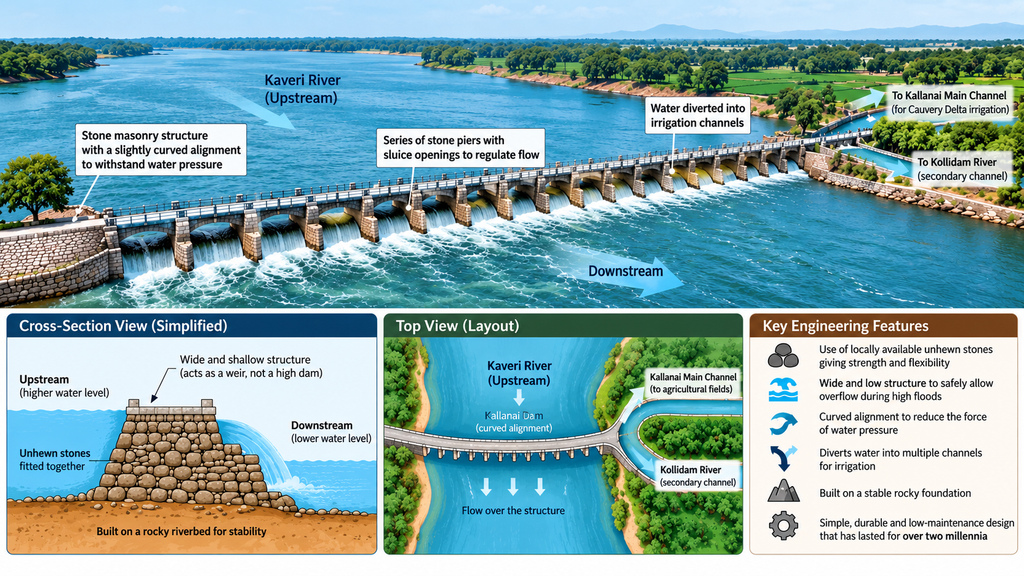
That single design philosophy explains why Kallanai has survived nearly two millennia, while many far larger, heavier structures across history have failed or vanished.
Why Kallanai Still Matters
Kallanai isn’t a museum piece. It is a working part of Tamil Nadu’s agricultural backbone.
The canals that branch out from Kallanai irrigate large parts of the fertile Cauvery delta, an area often referred to as the rice bowl of Tamil Nadu. What began as an irrigation system for a few thousand acres now supports irrigation across a much larger stretch of delta farmland, following modifications made during the British colonial period in the 19th century, when engineer Sir Arthur Cotton reinforced and expanded the structure’s capacity.
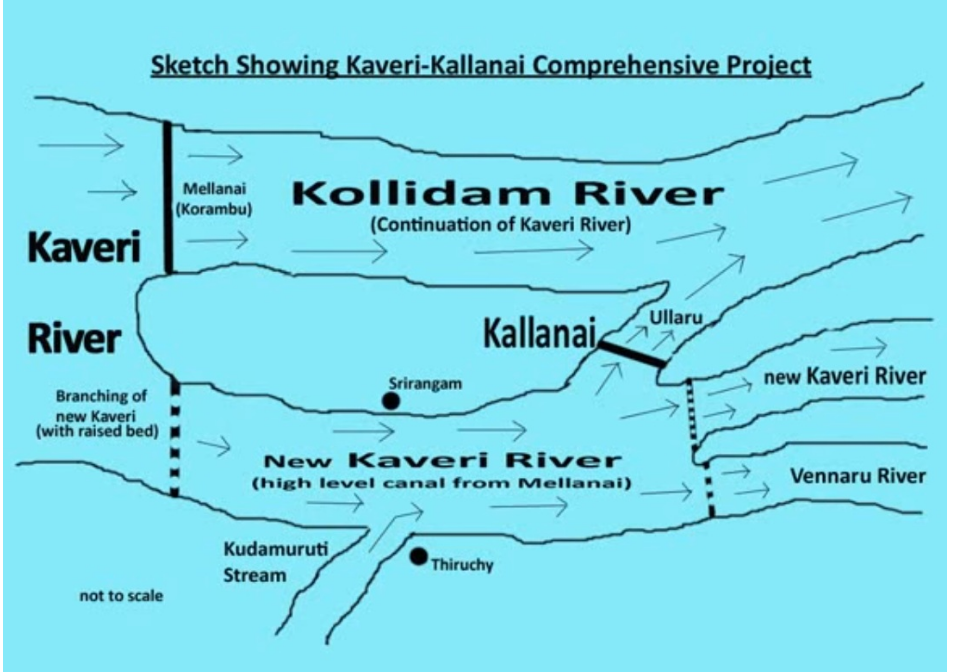
Millions of people, directly or indirectly, depend on the water Kallanai continues to redirect — farmers growing paddy, families running allied businesses, and entire local economies built around a reliable water supply. Few pieces of infrastructure anywhere in the world can claim uninterrupted relevance across two thousand years.
What Modern Construction Can Learn From Kallanai
Kallanai offers lessons that go far beyond ancient history.
- Engineering with nature, not against it — Working with the river’s natural flow, instead of resisting it, remains a sound principle for sustainablehttps://digitallabourchowk.com/2026/03/24/engineers-are-jobless-in-india/ infrastructure today.
- Skilled labour is the real foundation — Every stone at Kallanai reflects the expertise of workers who understood their material and craft. That reliance on skilled hands hasn’t changed; today’s masons, machine operators, and site workers remain equally central to any successful project.
- Long-term thinking over short-term speed — Kallanai wasn’t built for quick results. It was built to last, a mindset increasingly valuable in an age of infrastructure that ages fast.
- Resource efficiency matters — Using locally available stone efficiently, without waste, is a lesson modern construction continues to relearn through sustainability practices.
Conclusion
Kallanai isn’t standing after 2,000 years because of clever machines or advanced materials. It’s standing because people — planners, masons, and labourers — understood their craft deeply and executed it with patience and precision.
That’s the real story behind every great structure, ancient or modern: infrastructure is never just stone, steel, or cement. It is built, stone by stone, by the hands and knowledge of the workforce behind it — a truth as relevant to India’s construction sites today as it was to the banks of the Kaveri, nearly two millennia ago.
FAQ Section:
Q1: How old is Kallanai Dam? Kallanai is generally dated to around the 2nd century CE, making it nearly 2,000 years old, though some sources place its origins slightly earlier.
Q2: Who built the Kallanai Dam? It is traditionally attributed to Karikala Chola, a ruler of the early Chola dynasty, though exact historical records are limited.
Q3: What is the purpose of Kallanai Dam? Kallanai diverts water from the Kaveri River into canals to irrigate the fertile Cauvery delta region, rather than storing water like a conventional dam.
Q4: Is Kallanai Dam still in use today? Yes. It remains fully operational and continues to support irrigation across a large part of Tamil Nadu’s delta farmland, making it one of the oldest water-management systems still functioning in the world.
I just got the More insight about this Dam which i am goggling through the Goggle late night School Projects
Great info, really interesting to see these ancient monuments still standing today and helping people. The history and the work that went into preserving and showcasing them. Really appreciate the effort you put into sharing this information!
Just got to know some interesting facts